简体中文
简体中文 Français
 لالعربية

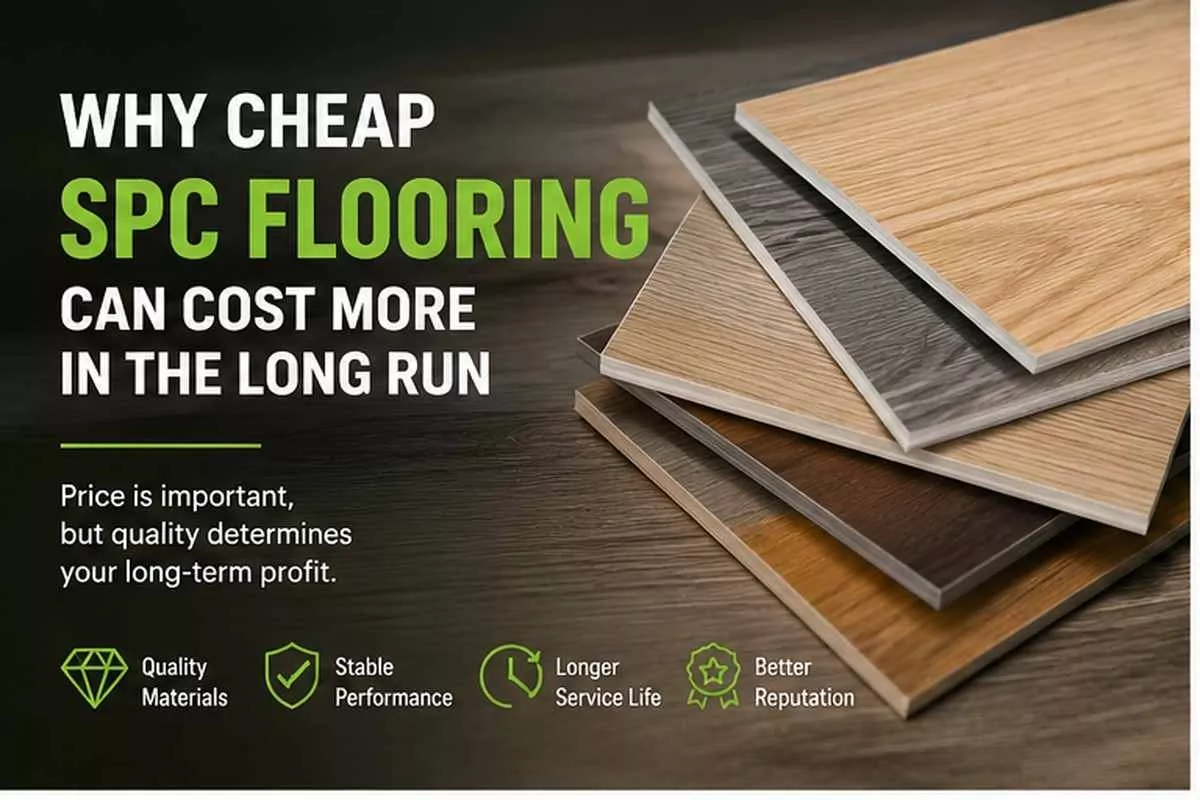
Why Cheap SPC Flooring Can Cost More in the Long Run
When buyers compare SPC flooring suppliers, price is often the first thing they check. A lower price may look attractive, especially for bulk orders, wholesale business or project supply. However, in the flooring industry, the lowest price is not always the best choice.
SPC flooring price can vary significantly because of raw materials, product thickness, wear layer, core density, locking system, backing material, production control and packaging quality. If buyers only focus on low price, they may face bigger losses later through claims, installation problems, customer complaints or project failure.
As a professional SPC flooring supplier, Floren Flooring believes that buyers should understand what is behind the price before choosing a factory.
Why Can SPC Flooring Prices Be So Different?
SPC flooring may look similar from the surface, but the internal structure and material quality can be very different. Two products may have the same color and design, but their cost and performance may not be the same.
The main factors that affect SPC flooring price include:
Whether the SPC core uses virgin material or recycled material
Actual flooring thickness
Actual wear layer thickness
Core density and stability
Locking system strength
IXPE backing quality
Surface treatment
Production accuracy
Packaging and export protection
A very low price usually means some cost has been reduced somewhere. The important question is: where was the cost reduced?
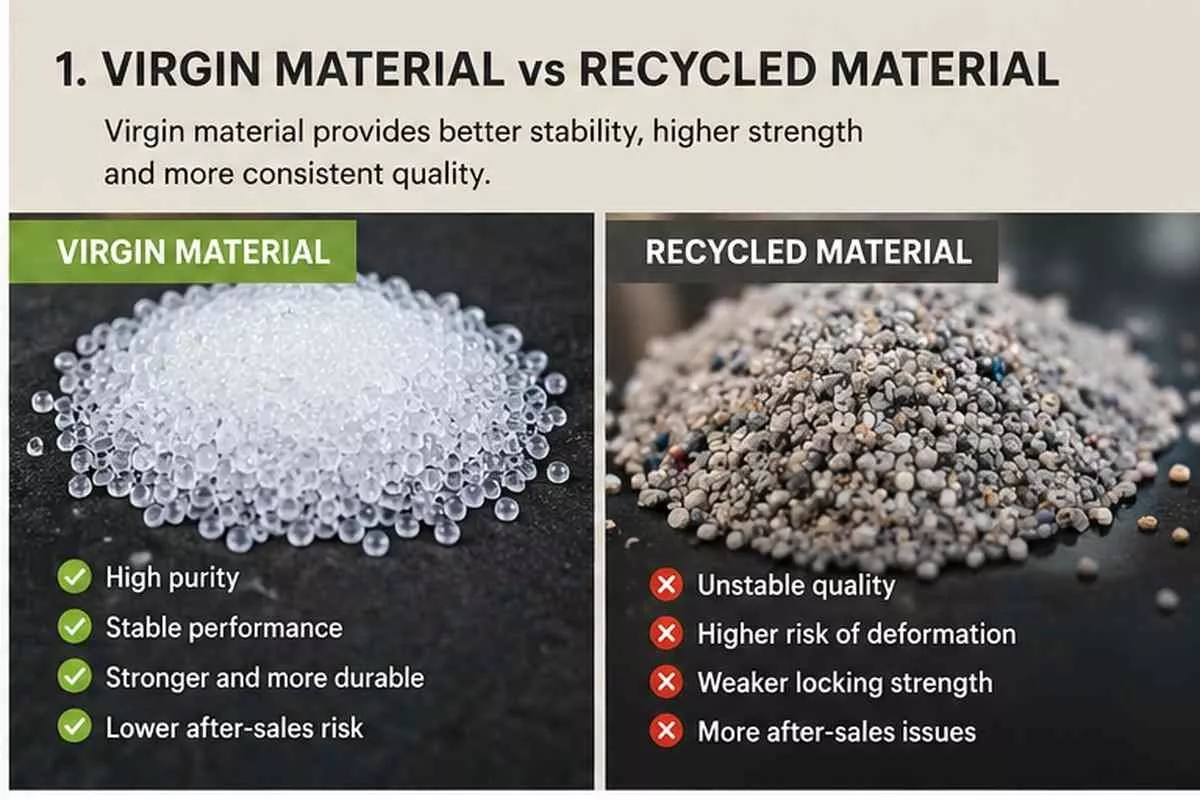
1. Is the SPC Flooring Made with Virgin Material?
Raw material is one of the most important factors affecting SPC flooring quality and price.
SPC flooring made with stable virgin material usually has better dimensional stability, stronger core performance and more consistent product quality. If too much recycled material or unstable material is used, the flooring may have a higher risk of:
Brittle core
Weak locking edges
Size change
Poor stability
Color or batch inconsistency
Higher after-sales risk
For project buyers and distributors, unstable raw material can create serious problems after installation. The product may look acceptable at first, but long-term performance may not be reliable.
Before placing a bulk order, buyers should ask the supplier about the material formula, sample quality, batch consistency and whether the factory can provide stable quality for repeated orders.
2. Is the Flooring Thickness Really Enough?
Thickness is another key reason why SPC flooring prices differ.
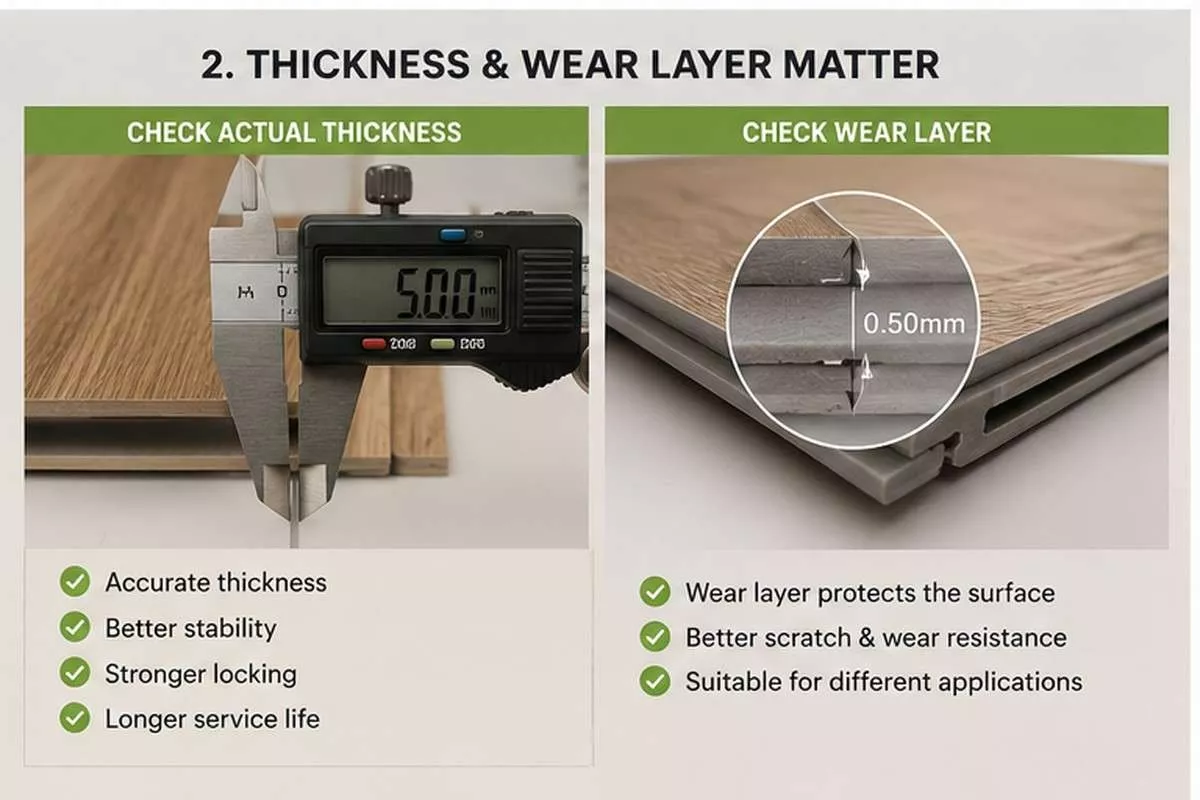
Some suppliers may quote a lower price by reducing the actual product thickness. For example, a product sold as 5.0mm may not always have the same structure, weight or stability as another 5.0mm product from a more reliable factory.
Flooring thickness affects:
Foot feel
Locking system strength
Stability
Installation performance
Application suitability
Project durability
For residential areas, commercial spaces and project applications, choosing the right thickness is important. A product that is too thin for the application may lead to poor performance, customer complaints and shorter service life.
Buyers should not only ask for the nominal thickness. They should confirm actual thickness, tolerance control and whether the thickness is suitable for their market and project needs.
3. Is the Wear Layer Thick Enough?
The wear layer protects the decorative surface of SPC flooring. It is directly related to scratch resistance, wear resistance and long-term appearance.
Common wear layer options may include:
0.2mm
0.3mm
0.5mm
Different applications require different wear layer thicknesses. Residential spaces may use a thinner wear layer, while offices, shops, hotels, apartments and commercial projects usually require better wear resistance.
If the wear layer is too thin, the floor may show wear marks faster, especially in high-traffic areas. This can affect both product reputation and customer satisfaction.
When comparing SPC flooring prices, buyers should always confirm the wear layer thickness. A cheaper product may look similar, but the wear layer may be reduced to lower cost.
4. Does the SPC Core Density Meet the Requirement?
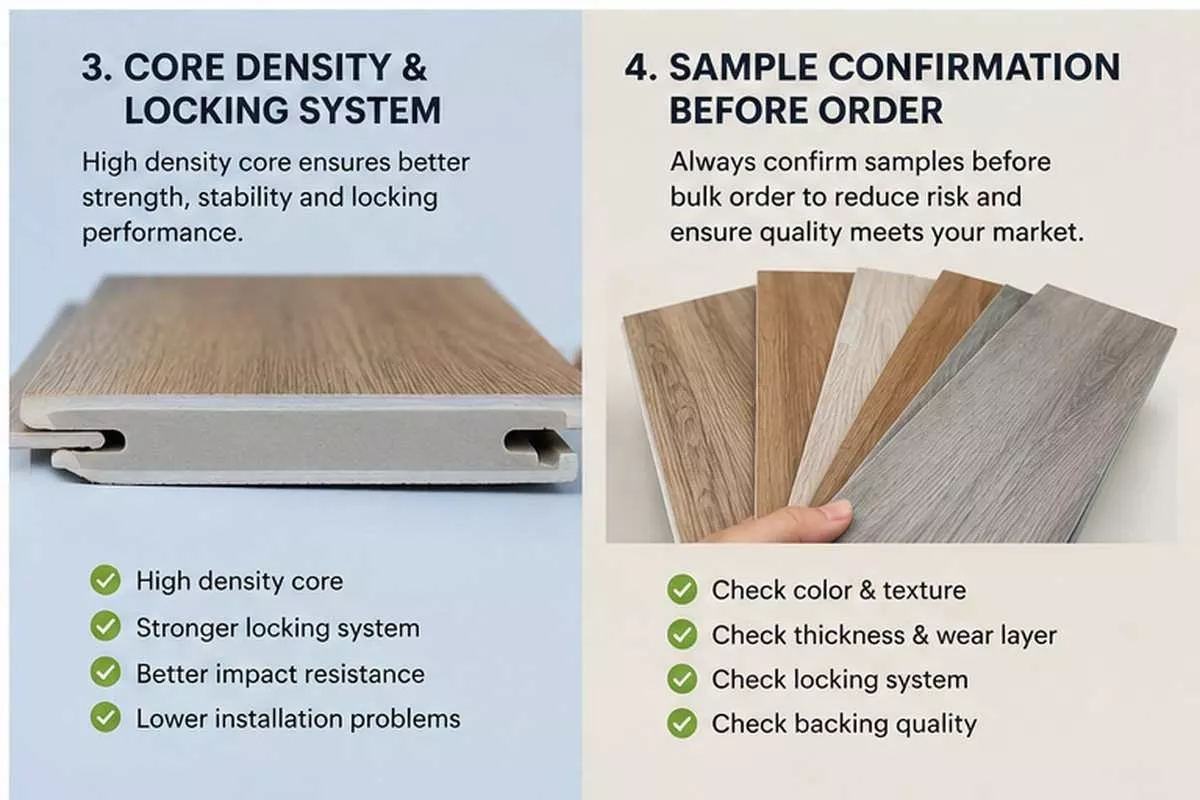
Core density affects the strength, stability and overall performance of SPC flooring. A stable and qualified core helps the floor resist pressure, maintain shape and support the locking system.
If the core density is too low or unstable, the flooring may have problems such as:
Weak click-lock connection
Easier edge damage
Poor impact resistance
Higher risk of deformation
Less stable installation performance
For distributors and contractors, density problems may not be obvious before installation. But after the product is installed and used, problems may appear through joint opening, hollow sound, broken locking edges or customer complaints.
That is why SPC flooring should not be judged only by surface color. Buyers need to evaluate structure, weight, density and locking performance.
5. Low Price May Reduce Your Real Profit
Many buyers think a lower purchase price means higher profit. But in real flooring business, low-quality products can reduce profit instead of increasing it.
Poor quality may lead to:
More customer complaints
Replacement cost
Project delay
Installation disputes
Extra communication cost
Loss of repeat orders
Damage to local brand reputation
For flooring distributors, reputation is extremely important. Once customers lose trust because of quality problems, it is difficult to recover the market.
A slightly lower purchase price may save money at the beginning, but if the product creates after-sales problems, the final cost can be much higher.
6. How Should Buyers Compare SPC Flooring Suppliers?
Instead of asking only for the lowest price, buyers should compare suppliers from several angles.
Check Product Structure
Confirm the basic structure of the SPC flooring:
UV coating
Wear layer
Decor film
SPC core
Balance layer
IXPE backing if required
A clear product structure helps buyers understand what they are paying for.
Confirm Real Specifications
Before bulk order, confirm:
Thickness
Wear layer
Size
Density
Surface texture
Locking system
Backing material
Packaging method
Never rely only on a simple price list.
Ask for Samples
Samples are important for checking:
Surface appearance
Core quality
Thickness
Locking system
Flexibility and rigidity
Color and texture
Backing quality
For project orders, sample confirmation should be completed before mass production.
Check Factory Support
A reliable SPC flooring supplier should support:
Product recommendation
Sample confirmation
OEM / ODM service
Export packaging
Loading photos
Project communication
Installation guidance
Factory support can help buyers reduce risk and improve project efficiency.
7. What Is a Better Buying Strategy?
A professional buyer should not simply choose the cheapest SPC flooring. A better strategy is to choose the product that matches the market, application and customer expectation.
For example:
Residential renovation may need cost-effective SPC flooring with stable quality.
Apartment projects may need better thickness and wear resistance.
Office and retail spaces may require stronger durability.
Hotel or commercial projects may need better surface performance and stable batch control.
Distributors may need a balanced product line covering different price levels.
The right product is not always the cheapest one. The right product is the one that helps you sell better, reduce complaints and build long-term customer trust.
Floren Flooring Suggestion for Buyers
Before choosing an SPC flooring supplier, buyers should ask these questions:
Is the flooring made with stable material?
Is the thickness accurate?
Is the wear layer suitable for the application?
Does the core density meet quality requirements?
Is the locking system strong and easy to install?
Can samples be confirmed before order?
Can the factory support export packaging and loading photos?
Can the supplier provide product and project recommendations?
These questions help buyers avoid hidden quality risks.
Conclusion
Low SPC flooring price may look attractive, but price should not be the only standard for choosing a supplier. Raw material, thickness, wear layer, density, locking system and production control can all create major differences in product quality and long-term cost.
For distributors, contractors and project buyers, purchasing poor-quality flooring can lead to greater losses than the money saved at the beginning.
Floren Flooring focuses on practical SPC flooring solutions for global buyers. We support product selection, sample confirmation, specification recommendation, bulk order supply and export packaging for distributors, wholesalers, contractors and project customers.
If you are comparing SPC flooring suppliers, do not only ask for the lowest price. Ask what quality, structure and support are behind the price.