简体中文
简体中文 Français
 لالعربية

SPC Flooring Dimensional Stability: Causes of Expansion, Shrinkage and Gapping
SPC flooring is widely used in residential, commercial and project spaces because of its rigid core structure, waterproof performance, easy installation and stable appearance. However, in real projects, some buyers and contractors may still face problems such as floor expansion, shrinkage, gapping, lifting, edge curling or locking failure.
These problems are not always caused by one single reason. In many cases, they are related to product structure, raw material quality, temperature changes, subfloor condition, installation method and site management.
As an SPC flooring supplier for bulk orders and project applications, Floren Flooring believes that dimensional stability should be considered before product selection, installation and delivery.
What Is Dimensional Stability in SPC Flooring?
Dimensional stability refers to the ability of SPC flooring to maintain its original size and shape under changes in temperature, humidity, load and daily use.
For project buyers, good dimensional stability means the flooring can better control:
Expansion
Shrinkage
Gapping between planks
Edge lifting
Locking system stress
Surface unevenness after installation
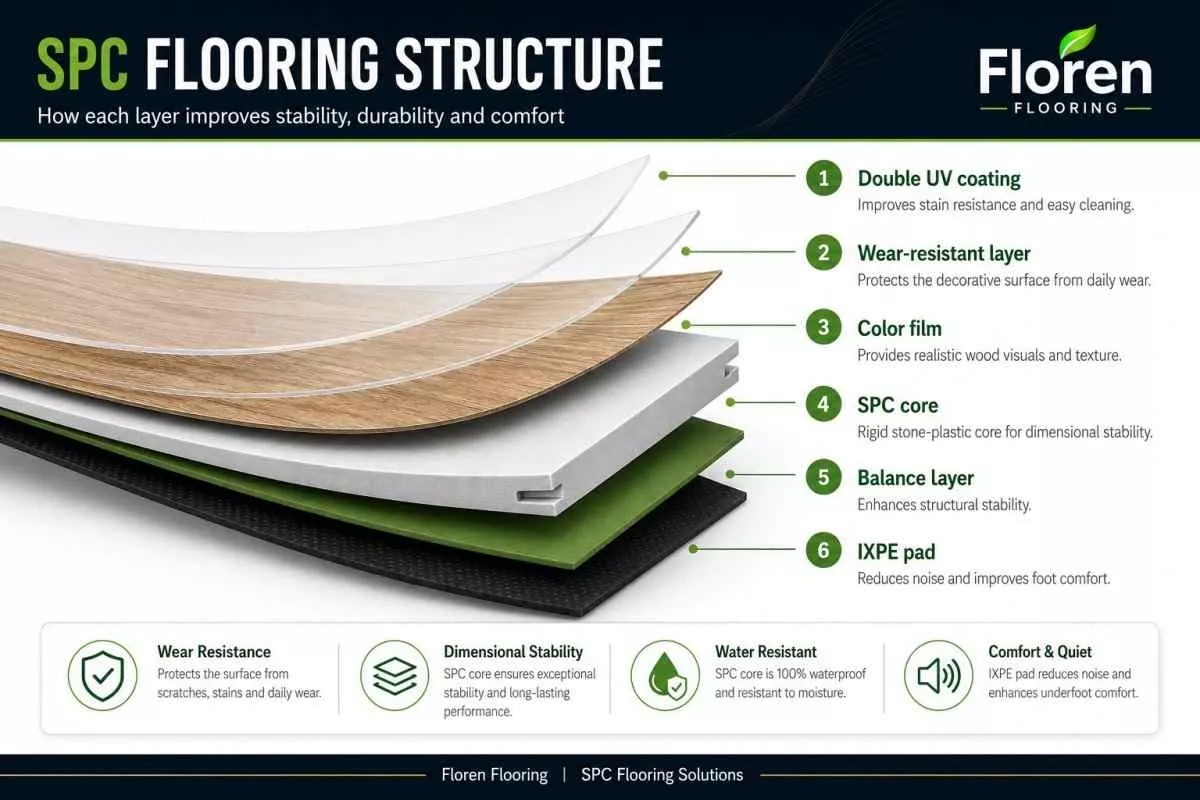
Although SPC flooring has a rigid stone-plastic composite core, it still needs proper product quality control and correct installation conditions to perform well over time.
Common Dimensional Stability Problems
1. Expansion After Installation
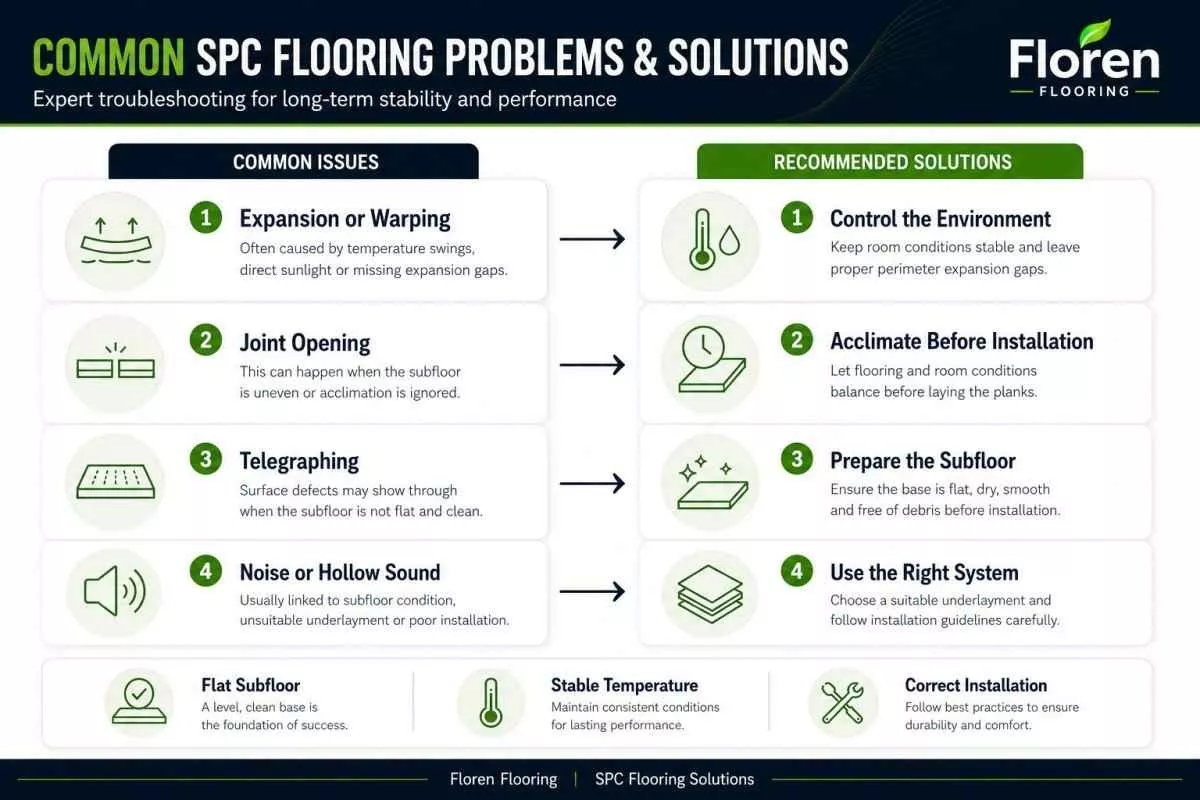
Expansion happens when the flooring slightly increases in size after installation. If there is not enough expansion space near walls, columns, door frames or fixed furniture, the flooring may press against surrounding structures.
This can cause:
Floor lifting
Arching
Locking stress
Uneven walking surface
Noise when walking
In large spaces, long corridors or areas exposed to strong sunlight, expansion risk should be considered more carefully.
2. Shrinkage and Visible Gaps
Shrinkage may appear when the floor contracts due to temperature changes, unstable site conditions or poor material stability. Small gaps may appear between planks, especially along the short side or long side joints.
Common signs include:
Open joints
Uneven seams
Visible dark lines between planks
Weak connection at locking areas
For commercial projects, visible gaps can affect both appearance and customer confidence.
3. Edge Lifting or Curling
Edge lifting may be caused by subfloor unevenness, poor locking engagement, improper installation pressure, moisture under the floor, or temperature-related movement.
If the flooring is installed over an uneven base, some planks may not sit firmly on the ground. Over time, movement and pressure may make the edges lift or feel unstable.
4. Locking System Failure
The locking system is one of the key parts of SPC flooring performance. If the locking profile is too weak, too loose or not precisely produced, the floor may separate more easily during use.
Possible results include:
Joint opening
Clicking noise
Plank movement
Poor installation efficiency
Higher after-sales risk
For bulk orders and commercial projects, locking system quality should be checked before shipment.
Main Causes of SPC Flooring Expansion, Shrinkage and Gapping
1. Unstable Raw Material Formula
The SPC core is the foundation of the flooring. A stable formula helps improve rigidity, strength and dimensional performance.
If the formula is unstable, the flooring may have higher risk of:
Size change
Brittleness
Locking breakage
Poor thermal stability
Uneven product quality between batches
For project supply, stable raw material control is more important than simply choosing a low price.
2. Poor Production Control
SPC flooring dimensional stability is also affected by production control. Temperature, extrusion process, cooling process, thickness control and cutting accuracy can influence the final floor performance.
Poor production control may lead to:
Inconsistent thickness
Uneven plank size
Weak locking system
Warping risk
Batch color or structure difference
This is why factory inspection and production management matter for B2B buyers.
3. Incorrect Site Temperature
SPC flooring should not be installed in unstable site conditions. If the site temperature changes too much before, during or after installation, the flooring may move after installation.
Common risk situations include:
Installation before windows and doors are completed
Strong direct sunlight exposure
Air conditioning not yet operating
Very hot or very cold jobsite
Long-term storage under unsuitable conditions
For large projects, the flooring should be stored and installed under controlled site conditions.
4. Uneven or Weak Subfloor
A poor subfloor is one of the most common causes of flooring problems. Even high-quality SPC flooring may perform badly if the base is not suitable.
The subfloor should be:
Flat
Dry
Clean
Strong
Free from dust, oil and loose particles
Without obvious cracks or hollow areas
If the subfloor is uneven, the locking joints may receive extra stress during use. This can cause noise, joint opening or edge lifting.
5. Insufficient Expansion Gap
SPC flooring needs enough expansion space around walls and fixed structures. If the floor is installed too tightly, movement has no space to release.
Areas that need attention include:
Wall edges
Door frames
Columns
Cabinets
Large fixed furniture
Long corridors
Transition areas
Expansion gaps should be planned according to project conditions and installation requirements.
6. Wrong Installation Direction or Large Continuous Area
Large continuous flooring areas can increase stress. If the layout is not planned correctly, expansion and contraction may become more visible.
For large rooms, open commercial spaces or long corridors, installers should consider:
Installation direction
Room shape
Transition strips
Doorway separation
Sunlight exposure
Fixed object locations
A proper layout plan can reduce later installation risk.
7. Moisture Under the Floor
SPC flooring itself is waterproof, but that does not mean the installation base can be ignored. Moisture under the flooring may affect the subfloor, create odor, cause mold risk, or influence the stability of the whole flooring system.
Before installation, the jobsite should be checked for:
Ground moisture
Water leakage
Wet concrete
Poor ventilation
Unfinished wet construction work
Waterproof flooring still needs a dry and qualified installation environment.
How to Prevent SPC Flooring Dimensional Problems
1. Choose Stable SPC Flooring from a Reliable Factory
Buyers should not only compare price. They should check product structure, raw material stability, locking system, thickness accuracy, surface quality and factory production control.
A reliable SPC flooring supplier should support:
Sample confirmation
Specification checking
Batch consistency control
Locking system inspection
Export packaging
Project supply support
2. Confirm Product Specification Before Bulk Order
Before placing a bulk order, buyers should confirm:
Thickness
Wear layer
Plank size
IXPE backing requirement
Locking type
Surface texture
Color model
Packaging method
Application area
Different projects may require different specifications. For example, residential spaces, rental apartments, offices, hotels and commercial areas may not use the same thickness or wear layer.
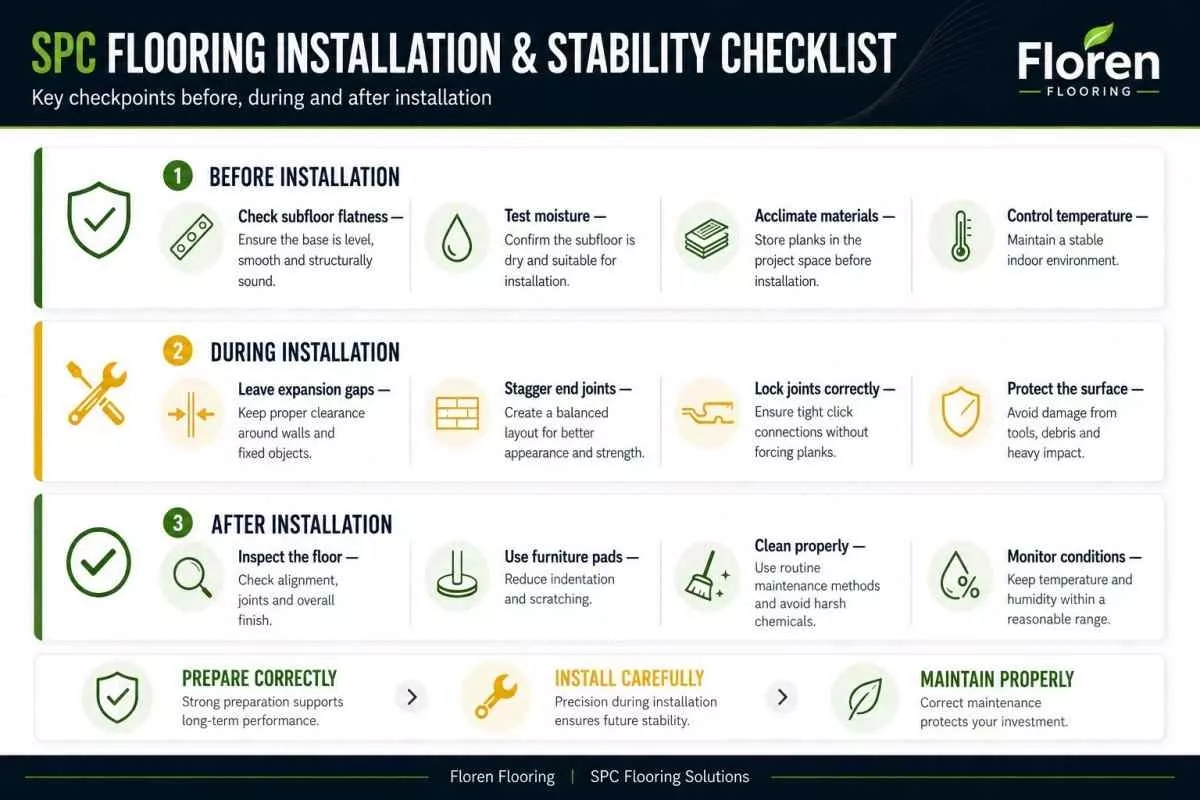
3. Check the Subfloor Before Installation
Subfloor checking should not be skipped. A qualified subfloor reduces installation risk and improves long-term performance.
The project team should check:
Flatness
Moisture condition
Surface strength
Cleanliness
Cracks
Hollow areas
Dust or oil contamination
If the base is not ready, installation should be delayed until the site condition is corrected.
4. Allow Proper Acclimation and Site Control
Before installation, flooring should be stored in the installation area or suitable indoor environment according to project requirements. The site should avoid extreme temperature changes.
Good site control includes:
Stable indoor temperature
Dry installation area
No cross-construction interference
Finished windows and doors
Controlled sunlight exposure
Proper storage of materials
5. Keep Correct Expansion Gaps
Installers should leave proper expansion gaps around walls and fixed structures. This is especially important for large rooms, corridors and commercial spaces.
The expansion gap should not be blocked by tight skirting, heavy fixed furniture or incorrect edge treatment.
6. Inspect the Locking System During Installation
During installation, the locking system should be fully engaged. If planks are forced into position, the locking edge may be damaged.
Installers should check:
Whether the planks connect smoothly
Whether the joints are tight
Whether any locking edge is broken
Whether the plank surface remains flat
Whether there is movement after installation
Damaged planks should not be installed into the floor system.
7. Use Proper Packaging and Transportation Protection
For export orders, packaging also affects final product condition. Poor packaging may cause edge damage, corner breakage, box deformation or moisture exposure during transportation.
Floren Flooring supports export packaging and loading communication to help reduce damage during shipment.
Technical Checklist for Project Buyers
Before confirming an SPC flooring project, buyers can use the following checklist:
Is the flooring thickness suitable for the project?
Is the wear layer suitable for expected traffic?
Is IXPE backing required?
Is the locking system strong and easy to install?
Are samples confirmed before bulk order?
Is the subfloor condition checked?
Is the project exposed to direct sunlight or temperature changes?
Are expansion gaps planned?
Is the packaging suitable for export shipment?
Are loading photos or inspection photos required before shipment?
This checklist helps reduce quality disputes and after-sales problems.
Floren Flooring Project Support
Floren Flooring provides SPC flooring solutions for distributors, wholesalers, contractors and project buyers. We support product selection, sample confirmation, specification recommendation, OEM/ODM requirements, export packaging, container loading and project communication.
For buyers who need stable SPC flooring for residential, commercial or project applications, choosing the right product and controlling installation details are both important.
Conclusion
SPC flooring expansion, shrinkage, gapping and lifting are usually caused by a combination of product quality, site condition and installation control. A stable SPC flooring project should start from correct product selection, reliable factory production, qualified subfloor preparation and professional installation management.
For bulk orders and project supply, Floren Flooring recommends confirming samples, specifications, installation conditions and packaging details before shipment. This helps improve project performance and reduce future maintenance risk.