
 简体中文
简体中文 Français
 لالعربية

SPC flooring is made by combining a rigid mineral-filled PVC core with a decorative film, wear layer and protective surface coating. The material passes through mixing, extrusion, lamination, conditioning, cutting, click-lock profiling, inspection and packaging before it becomes a finished flooring plank.
The exact sequence can vary between SPC flooring production lines. Some factories combine several operations, while others complete surface treatment, backing and profiling on separate equipment. For importers, distributors and contractors, the important question is not only how SPC flooring is made, but how each production step is controlled.
SPC Flooring Manufacturing Process at a Glance
The main SPC flooring manufacturing steps are:
1. Raw material preparation
2. Formula mixing
3. SPC rigid-core extrusion
4. Decorative film and wear-layer lamination
5. Cooling and conditioning
6. Surface embossing and UV coating
7. Cutting into flooring planks
8. Click-lock profiling
9. Optional IXPE backing application
10. Final inspection and export packaging
No single production step determines the finished quality. Core formulation, temperature control, surface bonding, dimensional accuracy and inspection standards must work together.
1. Raw Material Preparation
SPC rigid core is generally produced from calcium carbonate, PVC resin, stabilizers and processing additives. The factory prepares and checks these materials before mixing.
Raw material consistency affects core density, dimensional stability, extrusion performance and finished plank strength. Variations between material batches may create differences in colour, brittleness, weight or processing behaviour.
Commercial buyers do not normally need the supplier’s confidential formula, but they should confirm how incoming materials are recorded, stored and inspected.
Buyer checkpoints:
• Material batch identification
• Storage conditions
• Supplier traceability
• Core consistency between repeat orders
• Use of virgin or recycled material according to the agreed specification
Core colour alone cannot prove material quality. Buyers comparing different formulations should review our virgin vs recycled SPC flooring guide.
2. Formula Mixing
The prepared materials are weighed and mixed according to the production formula. Controlled mixing distributes the resin, mineral filler and additives evenly before extrusion.
Poor mixing can contribute to uneven density, unstable extrusion, surface defects or differences between production runs. Mixing temperature, time and material feeding therefore need to be controlled consistently.
For a bulk SPC flooring order, the factory should use the approved specification throughout the production batch and record any material or formula changes.
3. SPC Rigid-Core Extrusion
The mixed compound enters an extrusion line, where heat and pressure convert it into a continuous rigid SPC core sheet. The sheet then passes through shaping or calendering equipment to control thickness and surface condition.
Extrusion is one of the most important stages in the SPC flooring manufacturing process. Unstable temperature, feeding or line speed may affect core density, thickness, flatness and internal structure.
During extrusion, the production team should monitor:
• Sheet thickness
• Surface flatness
• Core density and consistency
• Sheet temperature
• Edge condition
• Visible bubbles, cracks or contamination
Samples taken during production should be compared with the approved specification rather than judged only by appearance.
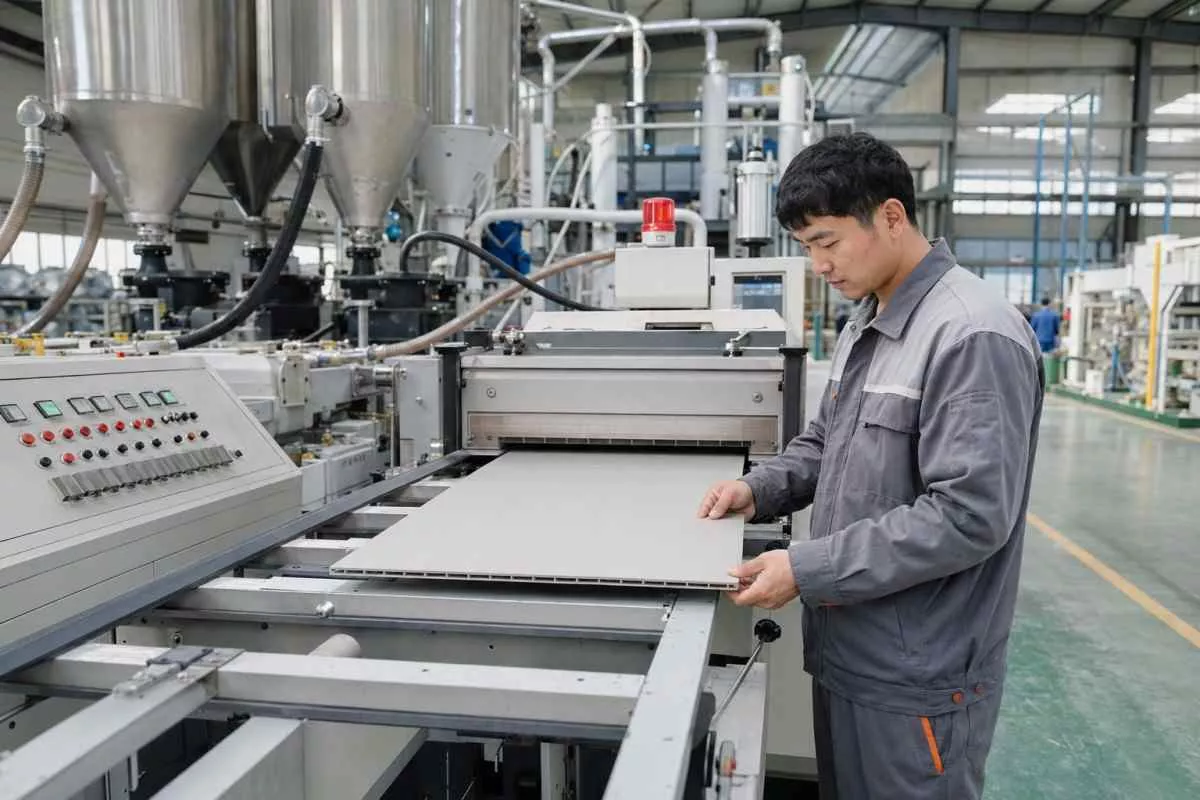
SPC rigid-core sheet extrusion is a critical stage for controlling core consistency, thickness and dimensional stability.
4. Decorative Film and Wear-Layer Lamination
The decorative film creates the visible wood, stone or abstract design. A transparent wear layer is positioned above the decorative film to protect the printed pattern during normal use.
These layers are bonded to the SPC core using controlled heat and pressure. Accurate alignment and stable bonding help prevent wrinkles, bubbles, film movement and delamination.
For large commercial projects, buyers should approve the décor code, colour range, surface texture and production sample before bulk lamination begins.
Lamination checkpoints include:
• Correct decorative film code
• Agreed wear-layer specification
• Film alignment
• Bonding consistency
• Surface cleanliness
• Colour consistency across multiple planks
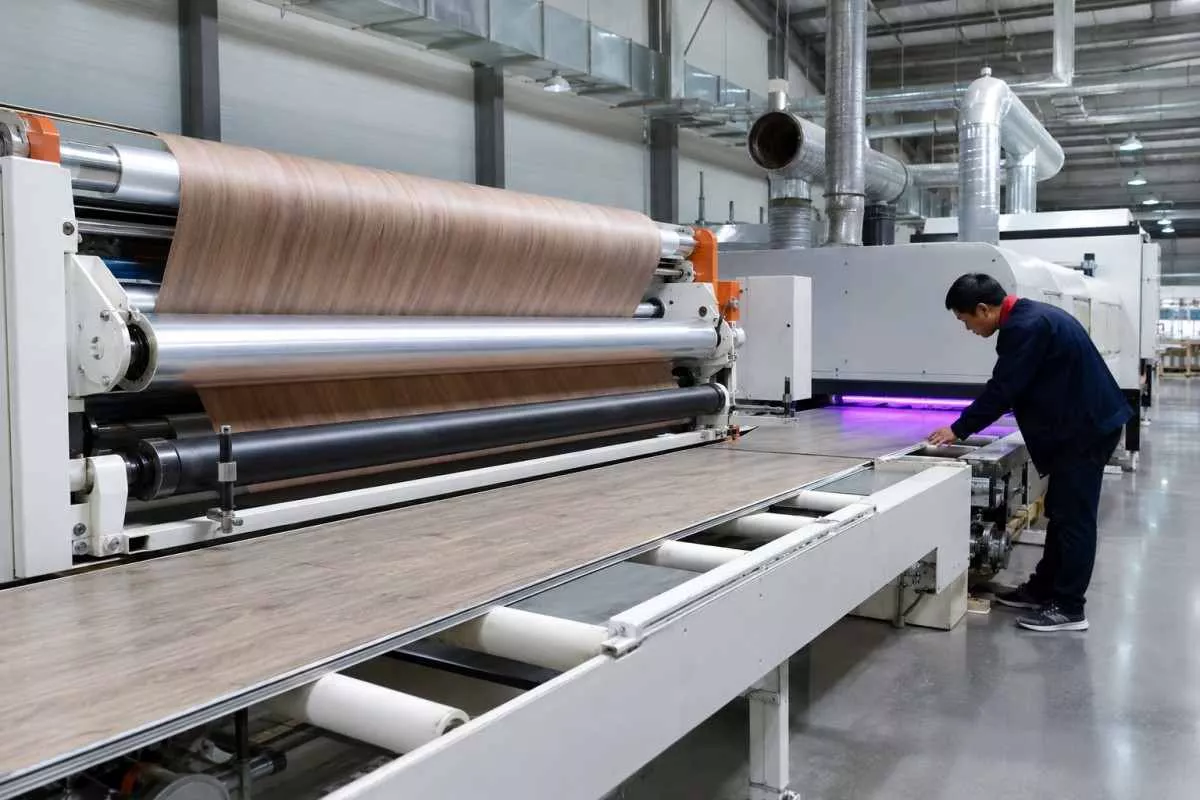
Decorative film, wear-layer bonding and surface treatment must remain consistent throughout bulk production.
5. Cooling and Conditioning
After extrusion and lamination, the SPC boards need controlled cooling and conditioning. This allows heat and internal production stress to reduce before cutting and click-lock profiling.
If boards are machined before they are sufficiently stable, dimensional changes may affect plank straightness, edge accuracy and locking performance.
Factories may use different conditioning procedures depending on the production line and product structure. Buyers should focus on whether the finished dimensions remain consistent after production.
6. Surface Embossing and UV Coating
The surface treatment gives SPC flooring its final texture, gloss and protective finish. Depending on the equipment, embossing may be completed during lamination or as part of another surface-processing stage.
A UV coating is applied and cured to help protect the flooring surface. Coating consistency influences gloss, stain resistance, cleaning performance and the visibility of surface defects.
Available textures may include wood grain, stone texture, registered embossing and other finishes. EIR SPC flooring uses a synchronized texture that follows details in the printed wood pattern.
Surface inspection should check:
• Texture consistency
• Gloss differences
• Coating coverage
• Scratches and contamination
• Colour and pattern alignment
• Visible bubbles or surface marks
7. Cutting SPC Boards into Planks
After the boards are conditioned, they are cut into the required plank dimensions. Cutting accuracy is important because dimensional variation can affect the next profiling stage and the final installation.
For project orders, the production specification should clearly record plank length, width, thickness, edge design and acceptable tolerances.
Inspectors should measure samples from different positions and production times rather than checking only the first few planks.
8. Click-Lock Profiling
The cut planks pass through profiling equipment that machines the tongue-and-groove locking geometry along the edges. This creates the click-lock system used during floating installation.
Small profiling errors may cause difficult assembly, weak joints, height differences, gaps or damaged locking edges. A plank can look visually acceptable while still creating installation problems.
Click-lock inspection should include:
• Profile dimensions
• Edge cleanliness
• Joint assembly
• Joint opening and closing
• Surface height between connected planks
• Damage after repeated test assembly
A practical factory inspection should assemble several planks from different cartons to confirm that the system fits consistently.
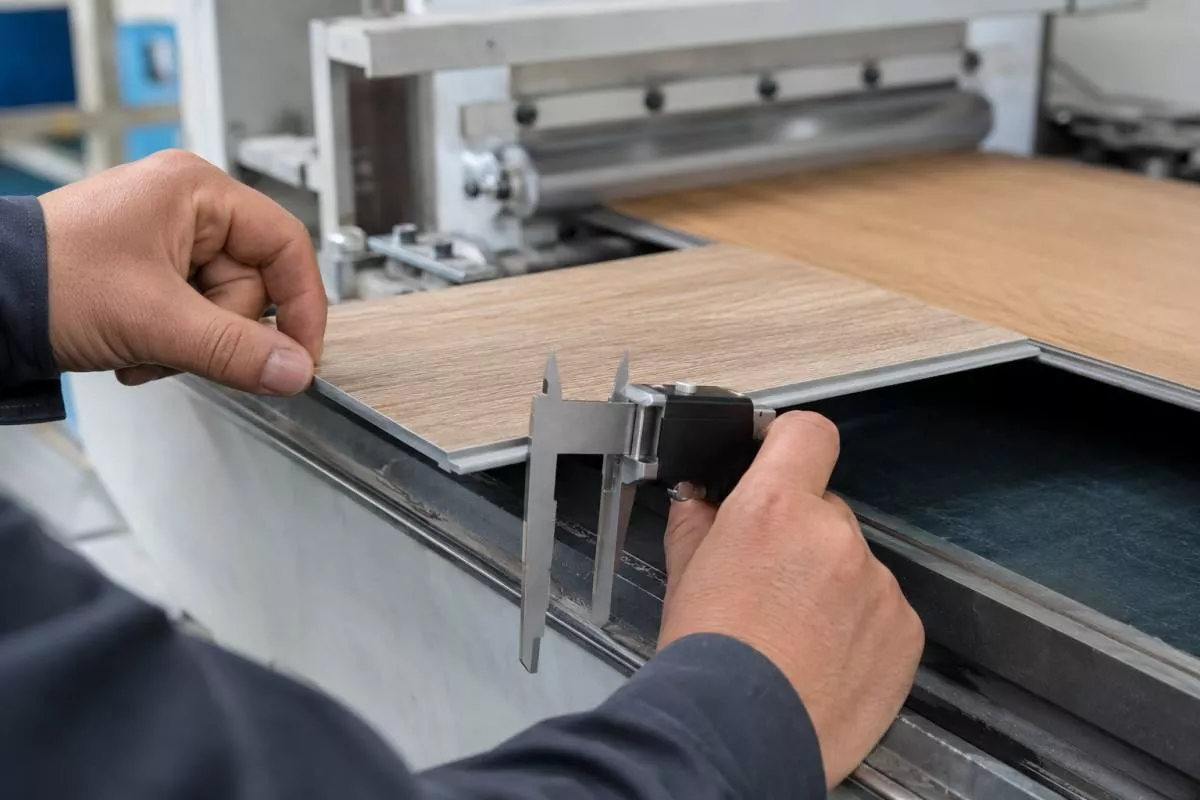
Thickness, plank dimensions and click-lock geometry should be measured during production and verified through assembly testing.
9. Optional IXPE Backing Application
Some SPC flooring specifications include an attached IXPE backing. The backing is bonded to the underside of the plank after the main board and surface processes are completed.
IXPE backing can simplify material handling and may improve walking comfort, but it does not correct an uneven or wet subfloor. The contractor must still follow the project’s subfloor and installation requirements.
Before production, buyers should confirm:
• Whether attached backing is required
• Backing type and thickness
• Bonding coverage
• Backing alignment
• Carton quantity and final packed weight
10. Final Inspection and Export Packaging
Finished SPC flooring should be inspected before packing. Quality control must cover more than surface appearance because installation and shipment problems often begin with dimensions, locking profiles or unsuitable packaging.
Final inspection should confirm:
• Product code and colour
• Total thickness
• Plank dimensions
• Wear-layer specification
• Surface condition
• Click-lock assembly
• Backing condition
• Carton labels and quantities
• Pallet and loading requirements
The approved reference sample should be retained for comparison with finished goods. For repeat orders, production and inspection records help the buyer identify changes between batches.
Export cartons, pallets, protective materials and container-loading plans should match the shipment method and destination. Weak packaging can create broken corners, crushed cartons or moisture exposure even when the flooring itself passes inspection.
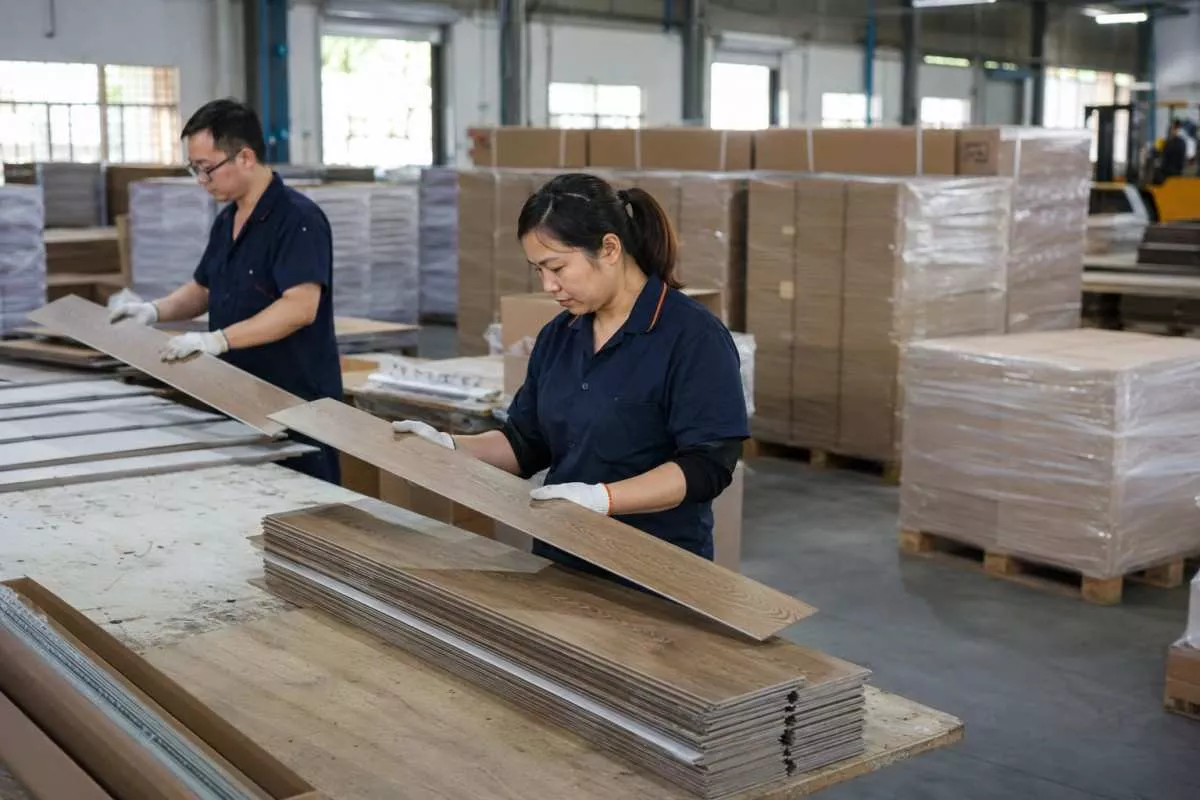
Finished planks are inspected for surface consistency, specifications and locking quality before export packaging.
Which Manufacturing Steps Affect SPC Flooring Quality Most?
Every stage affects the final product, but B2B buyers should pay particular attention to five areas:
Core consistency: Influences dimensional stability, machining and plank strength.
Layer bonding: Helps prevent film movement, bubbles and delamination.
Thickness and dimension control: Affects floor flatness and installation consistency.
Click-lock accuracy: Directly affects installation speed, gaps and joint performance.
Final inspection and packaging: Reduces shipment damage, specification errors and project delays.
Our SPC flooring quality-control guide explains the inspection points buyers should verify before shipment.
What Should Buyers Request Before Bulk Production?
A quotation based only on colour and thickness is not enough for a commercial SPC flooring order. Before production begins, the buyer and manufacturer should confirm:
• Décor and colour code
• Approved physical sample
• Total thickness and wear layer
• Plank dimensions
• Surface texture and gloss
• Click-lock profile
• IXPE backing requirement
• Carton and pallet specifications
• OEM label and packaging details
• Inspection standard
• Order quantity and destination
• Production and loading schedule
Importers should also ask whether one order will be produced in a continuous batch. Clear batch allocation helps reduce colour and specification differences when flooring is installed over a large area.
How to Evaluate an SPC Flooring Manufacturer
A factory visit should examine more than the number of machines. Buyers should review production records, sample approval procedures, in-process measurement, finished-product inspection, packaging control and corrective-action handling.
Useful evidence may include:
• Raw material and batch records
• Thickness and dimension inspection records
• Click-lock assembly samples
• Retained approval samples
• Packaging specifications
• Container-loading photographs
• Previous project or export-order documentation
Production capacity must also match the buyer’s delivery schedule. Read our SPC flooring production capacity guide for bulk-order planning considerations.
SPC Flooring Manufacturing Support from Floren Floor
Floren Floor supplies SPC flooring for importers, distributors, wholesalers, contractors and commercial project buyers. Support can include product selection, physical samples, specification matching, OEM packaging, production coordination, quality inspection and container-loading preparation.
To request a factory quotation, provide the required thickness, wear layer, plank dimensions, surface, backing, quantity, packaging requirements and destination port.
Send Floren Floor your target specification and project quantity to receive suitable SPC flooring options, samples and a bulk-order quotation.
Frequently Asked Questions
How is SPC flooring made?
SPC flooring is made by mixing mineral filler, PVC resin, stabilizers and processing additives, extruding a rigid core, laminating the decorative and wear layers, applying surface treatment, cutting the boards, profiling the click-lock edges, inspecting the planks and packing them for shipment.
What is the core of SPC flooring made from?
The rigid core is generally made from calcium carbonate, PVC resin, stabilizers and processing additives. The exact formulation varies by manufacturer and product specification.
Is the decorative wood pattern printed directly on the SPC core?
Normally, the visible pattern comes from a separate decorative film laminated onto the rigid core and protected by a transparent wear layer and surface coating.
When is the click-lock system made?
The click-lock profile is machined after the SPC boards have been conditioned and cut into plank dimensions.
Is IXPE backing part of every SPC flooring product?
No. Attached IXPE is an optional component and depends on the selected product structure and project requirements.
Does a thicker SPC core always mean better quality?
No. Thickness is only one specification. Core consistency, dimensional accuracy, wear layer, locking quality and installation conditions must also be considered.
How can an importer check SPC flooring production quality?
The importer should approve physical samples, confirm specifications, review inspection records and check samples from different production times and cartons before shipment.
What information is required for an SPC flooring factory quotation?
Provide the required thickness, wear layer, plank size, surface texture, IXPE backing, quantity, OEM packaging request and destination port.
