
 简体中文
简体中文 Français
 لالعربية

SPC flooring is frequently considered for kitchens, bathroom dry areas, hotel rooms, serviced apartments and commercial renovation projects because its rigid core resists water and its surface is relatively easy to maintain.
Quick answer: SPC flooring can be used in kitchens and in the dry zones of many bathrooms when the subfloor, click joints, transitions and perimeter details are properly prepared. It is generally not the first choice for shower floors, continuously wet rooms, areas with floor drains or commercial kitchens that require frequent pressure washing.
The SPC plank may resist water, but this does not automatically make the complete installed floor system waterproof. Water can still move through damaged joints, wall edges, pipe penetrations and door thresholds.
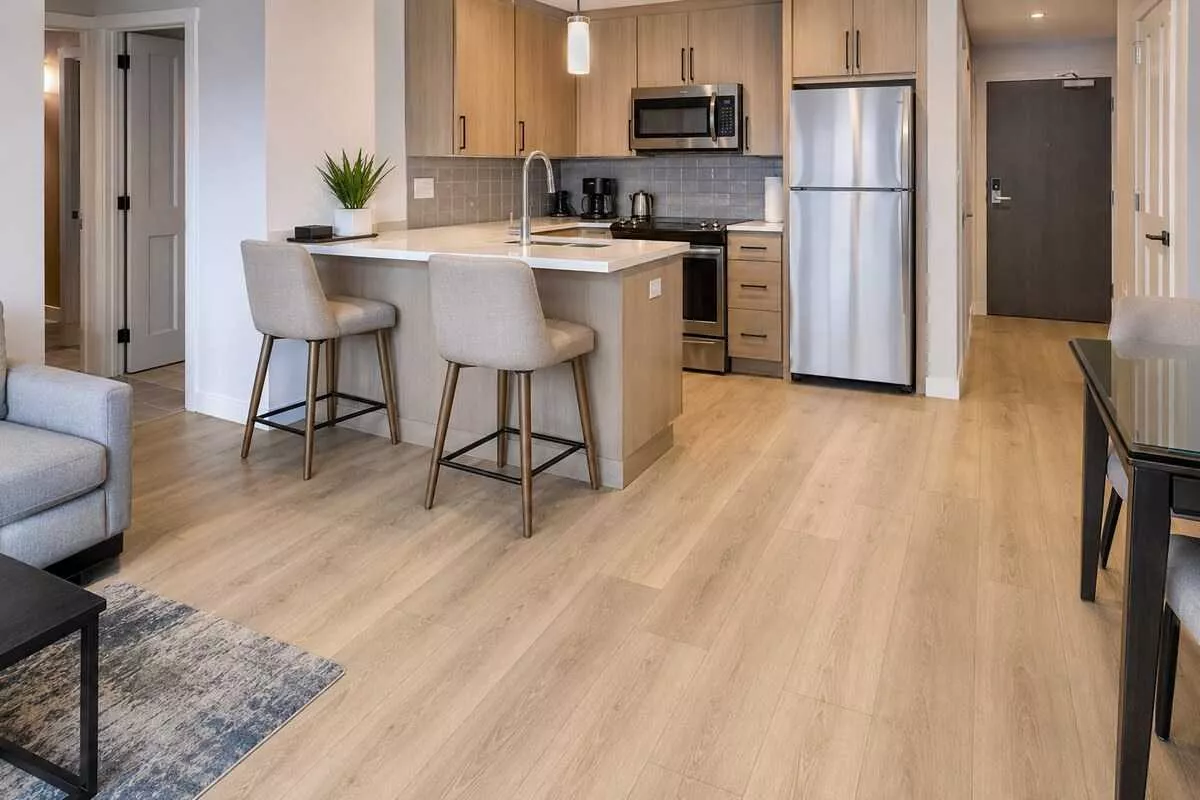
Light oak SPC flooring installed in a serviced-apartment kitchen and living area.
Where Can SPC Flooring Be Used?
Suitable or Potentially Suitable Areas
SPC flooring can be considered for the following applications when the product specification and installation method match the project:
• Residential and serviced-apartment kitchens
• Hotel room kitchenettes
• Bathroom vanity and dressing areas
• Hotel bathroom dry zones
• Laundry rooms with controlled water exposure
• Apartment renovation projects
• Changing rooms outside direct shower areas
• Humid-climate projects with a dry and properly prepared subfloor
Areas That Require a Different Flooring System
SPC click flooring is generally not recommended as the default solution for:
• Shower floors
• Open wet rooms without a separate threshold
• Areas where water remains on the floor for long periods
• Rooms designed around floor drains and frequent washing
• Saunas and areas exposed to excessive heat
• Commercial food-preparation kitchens with grease, heat and pressure washing
• Subfloors with unresolved moisture or water leakage
• Locations where local building codes require a certified wet-area system
Project contractors should verify the flooring manufacturer’s installation instructions, technical data and local wet-area requirements before approving SPC flooring for any moisture-prone environment.
SPC Flooring for Bathroom Dry Areas
Bathroom dry areas include vanity zones, dressing areas and sections outside an enclosed shower or bathtub. These areas may experience occasional splashes and higher humidity, but they are not designed to hold standing water.
SPC flooring can provide a wood-look surface in these areas while allowing the shower wet zone to use tile or another dedicated wet-area flooring system.
A clear transition should be designed between:
• SPC flooring in the dry area
• Tile or another wet-area material inside the shower
• The bathroom threshold
• Adjacent bedroom or corridor flooring
The transition height, edge profile and floor direction should be confirmed before installation. Poorly planned transitions can create exposed edges, water-entry points and inconsistent floor levels.
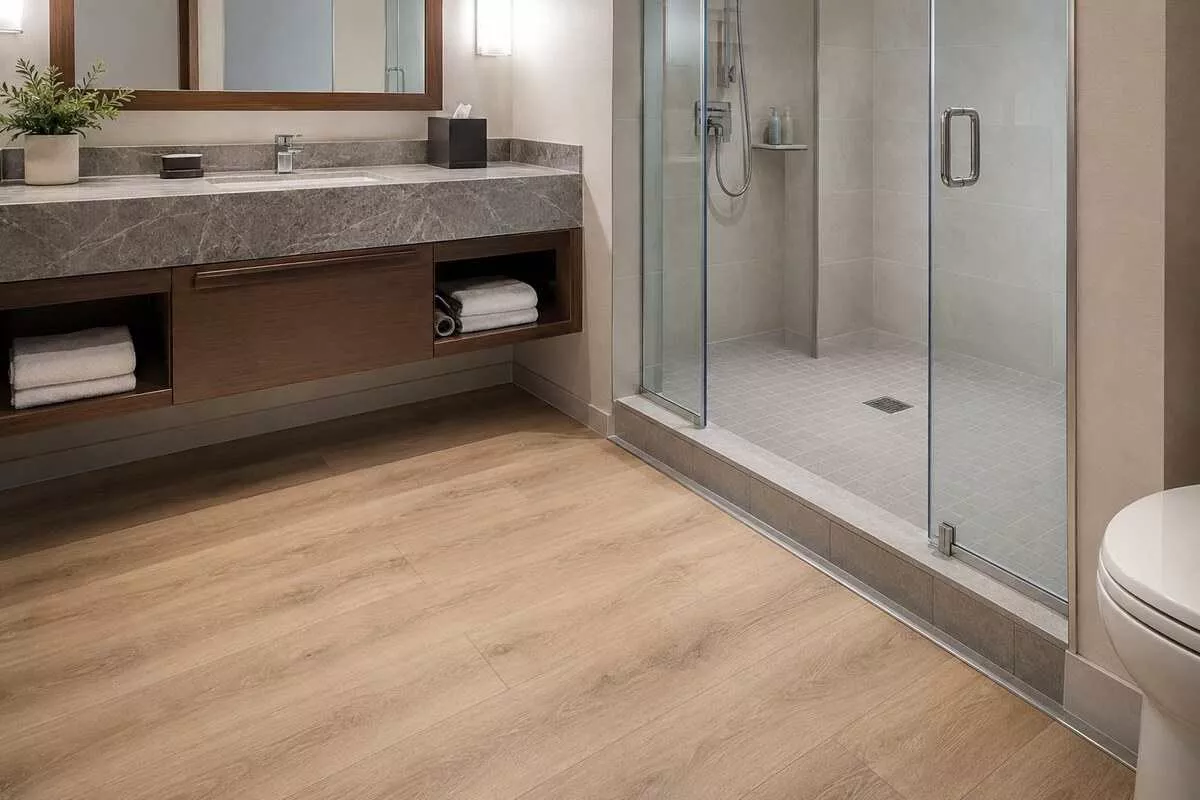
Wood-look SPC flooring in the bathroom dry zone with a separate tiled shower area.
Waterproof SPC Plank vs Waterproof Flooring System
This distinction is important for distributors, contractors and project buyers.
SPC Plank Water Resistance
The rigid SPC core does not contain the same moisture-sensitive wood fibers found in many traditional wood-based floors. This makes the plank itself suitable for environments where spills and humidity may occur.
Installed Floor System
The installed floor includes more than the plank. Its performance also depends on:
• Click-lock joint condition
• Perimeter expansion space
• Wall and door transitions
• Pipe penetrations
• Subfloor moisture
• Underlayment
• Sealant compatibility
• Installation workmanship
If water passes through the floor joints and remains underneath the planks, it may create odor, contamination, subfloor problems or damage to surrounding building materials even when the SPC core itself does not swell.
For this reason, waterproof SPC flooring should not be interpreted as permission to install the product in every wet environment without further evaluation.
SPC Flooring for Kitchen Renovation Projects
SPC flooring can be a practical option for apartment kitchens, hotel kitchenettes and other controlled kitchen environments. It provides a continuous wood-look surface and can coordinate with adjoining living and dining areas.
Before selecting SPC flooring for a kitchen project, confirm:
• Expected water and grease exposure
• Cleaning method
• Position of sinks and dishwashers
• Appliance movement
• Cabinet installation sequence
• Subfloor condition
• Floor transitions
• Required wear layer
• Replacement access
Kitchen Cabinets and Floating SPC Flooring
Floating SPC flooring should not be trapped by permanent cabinets or other fixed structures unless the specific product installation instructions permit it.
The flooring needs the required perimeter movement space. Heavy fixed cabinetry installed directly over a floating floor may restrict movement and contribute to lifting, separation or locking-system stress.
Contractors should coordinate the cabinet and flooring sequence before installation instead of making this decision after the cabinets arrive on site.
Areas Around Sinks and Dishwashers
Water-prone areas around sinks, refrigerators and dishwashers require careful detailing. Small leaks may remain unnoticed below cabinets or appliances.
Recommended project controls include:
• Checking water connections before installation
• Keeping appliance access available
• Using compatible perimeter protection where required
• Wiping spills promptly
• Avoiding long-term standing water
• Replacing damaged click-lock planks
Is SPC Flooring Suitable for Commercial Kitchens?
The answer depends on the type of commercial kitchen.
SPC flooring may be considered for light-use staff kitchens, hotel room kitchenettes, office pantries and similar controlled environments.
It is usually not the default choice for heavy food-service kitchens where the floor is exposed to:
• Frequent grease and oil
• Boiling liquids
• Floor drains
• Continuous standing water
• Pressure washing
• Strong cleaning chemicals
• Heavy wheeled equipment
• Specific hygiene and slip-resistance regulations
Heavy commercial kitchens commonly require a seamless or dedicated commercial wet-area flooring system. Buyers should not select a standard SPC product for these applications based only on its waterproof-core description.
Subfloor Requirements for Kitchens and Bathrooms
Subfloor preparation is one of the most important parts of a successful SPC flooring installation.
The subfloor should be:
• Clean
• Flat
• Dry
• Structurally sound
• Free from active leaks
• Free from loose material
• Prepared according to the product installation instructions
Subfloor Moisture Testing
A waterproof flooring plank does not eliminate the need for subfloor moisture testing. Moisture may still move through concrete or collect underneath a floating floor.
Before installation, the contractor should:
1. Check for visible moisture and active leaks.
2. Test the subfloor using an appropriate moisture-test method.
3. Record the test results for project documentation.
4. Compare the results with the flooring and underlayment requirements.
5. Correct the moisture source before installing the floor.
Subfloor Flatness
An uneven subfloor can place repeated pressure on the click-lock joints. In kitchens and bathrooms, this may increase the risk of joint movement and water entering through damaged connections.
Low areas, high points, loose tiles and damaged screed should be corrected before the SPC flooring is installed.
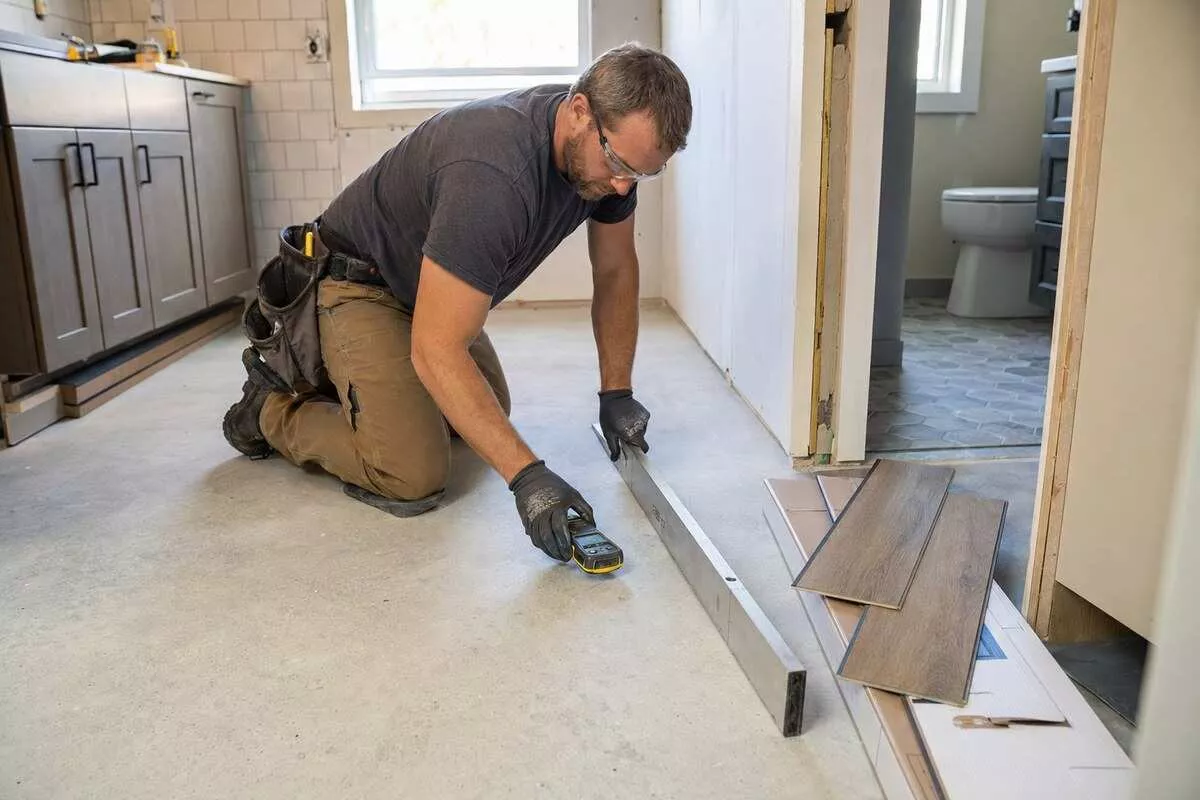
Subfloor flatness and moisture inspection before SPC flooring installation.
Can SPC Flooring Be Installed Over Existing Tile?
SPC flooring may be installed over existing tile in some renovation projects when the tile is stable, clean, flat and properly bonded.
Before installation, check:
• Hollow or loose tiles
• Raised tile edges
• Deep grout joints
• Moisture below the existing floor
• Door clearance
• Kitchen appliance clearance
• Bathroom threshold height
• Floor-drain requirements
SPC flooring should not be used to hide unresolved hollow tiles, water leakage or unstable substrates. The existing floor must be repaired before installation.
Bathroom Perimeter and Edge Sealing
Bathroom edges, pipe openings and door thresholds require careful treatment because they can become water-entry points.
Potential risk areas include:
• Toilet and vanity connections
• Pipe penetrations
• Shower thresholds
• Doorways
• Wall perimeters
• Transitions to tile
• Damaged click joints
Any sealant or perimeter treatment must be compatible with the flooring and must not incorrectly restrict the movement of a floating floor. Contractors should follow the product installation details rather than filling every expansion space with rigid adhesive.
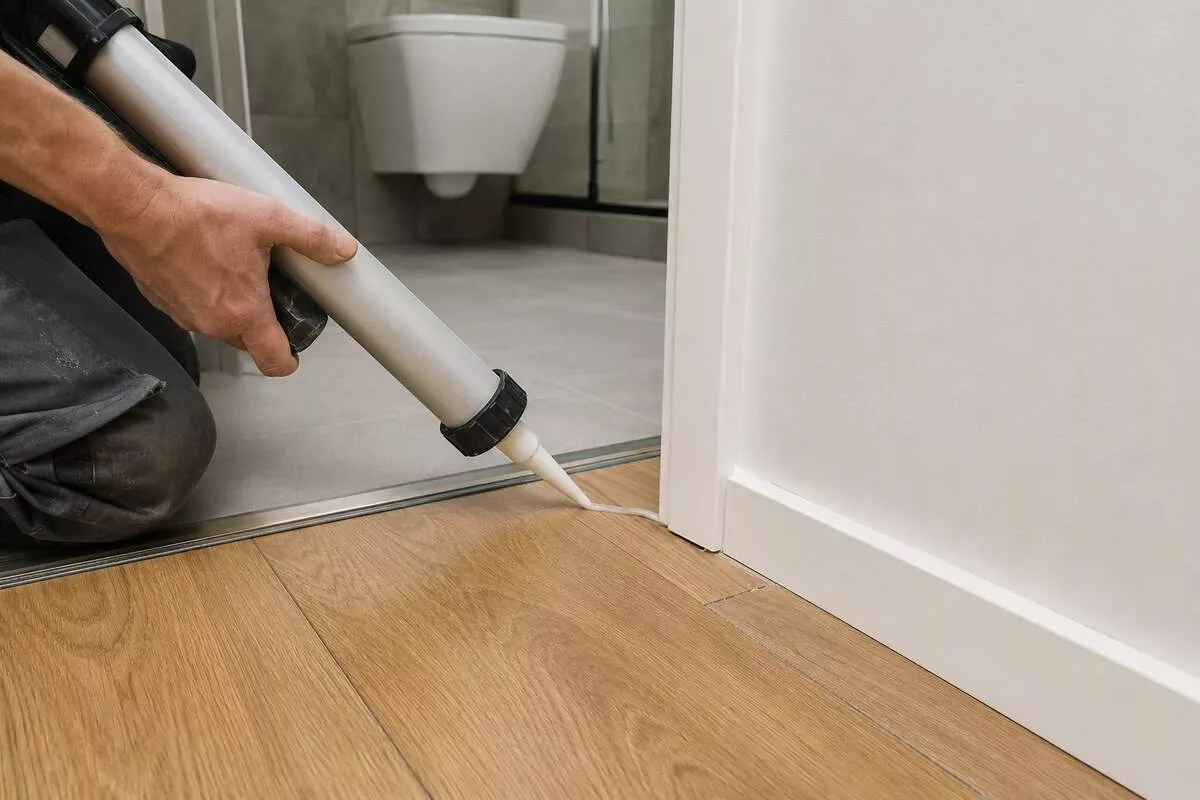
SPC flooring edge sealing and transition treatment at a bathroom doorway.
Expansion Space in Humid Areas
SPC flooring has a stable rigid-core structure, but it still responds to temperature changes and installation conditions. Correct expansion space remains necessary around walls, columns, cabinets, pipes and other fixed structures.
In humid markets and air-conditioned projects, buyers should consider:
• Indoor temperature during installation
• Direct sunlight
• Large glass windows
• Air-conditioning schedules
• Room dimensions
• Fixed furniture
• Transition profiles
• Product-specific expansion requirements
Waterproof performance does not eliminate expansion requirements.
Recommended SPC Flooring Specifications for Kitchen and Bathroom Dry Areas
The best specification depends on the project, traffic and installation conditions. Buyers can use the following points when discussing an order with an SPC flooring manufacturer.
Total Thickness
Many project buyers compare 5mm and 6mm SPC flooring for apartments, hotels and renovation projects. The final selection should consider subfloor quality, room transitions, walking comfort and budget.
Wear Layer
A 0.3mm wear layer may be considered for controlled residential applications. A 0.5mm wear layer is commonly requested for hotel, rental and frequently used project areas where additional surface protection is required.
Attached Underlayment
IXPE backing can improve walking comfort and help control certain impact sounds. It does not replace moisture testing, structural subfloor preparation or a project-specific vapor-control system.
Surface Finish
Matte and embossed wood-look surfaces are frequently selected for kitchens and bathroom dry areas. Buyers should request applicable slip-resistance test information when the project has specific safety requirements.
Locking System
Accurate click-lock profiles help maintain consistent joints. Buyers should inspect locking strength, edge condition and plank accuracy before approving a bulk order.
Kitchen and Bathroom Installation Checklist
Before installation:
• Confirm the area is a dry zone or controlled splash zone
• Check local wet-area requirements
• Stop all active water leaks
• Test subfloor moisture
• Check subfloor flatness
• Confirm cabinet and appliance installation sequence
• Approve transition details
• Confirm product thickness and wear layer
During installation:
• Follow the approved plank direction
• Maintain the required expansion space
• Inspect click joints for damage
• Avoid trapping the floating floor under fixed structures
• Complete bathroom and kitchen transitions carefully
• Keep production batches correctly allocated
After installation:
• Check all perimeter details
• Inspect doorway transitions
• Remove installation debris
• Protect the floor from following trades
• Test plumbing connections
• Provide cleaning instructions to the building operator
Maintenance in Kitchens and Bathroom Dry Areas
Routine maintenance helps reduce water and surface problems.
Recommended practices include:
• Wipe spills promptly
• Use entrance or sink-area mats where appropriate
• Avoid allowing water to remain around wall edges
• Use a suitable neutral cleaner
• Avoid aggressive cleaning pads
• Inspect joints after appliance movement
• Repair plumbing leaks immediately
• Replace planks with damaged locking edges
Cleaning methods should follow the flooring supplier’s product instructions.
Bulk-Order Information for Importers and Contractors
When requesting SPC flooring for kitchen, hotel bathroom or apartment renovation projects, provide:
• Project type
• Installation area
• Dry-zone or wet-zone classification
• Total quantity
• Preferred total thickness
• Wear layer requirement
• Attached IXPE requirement
• Plank size
• Surface texture
• Destination country
• Packaging requirements
• Project schedule
This information helps the manufacturer recommend a relevant specification instead of quoting a general SPC flooring product that may not match the application.
SPC Flooring Support from Floren Floor
Floren Floor supplies SPC flooring for overseas distributors, contractors, wholesalers, interior companies and project buyers.
We can provide available product specifications, wood-look color samples, surface options, IXPE backing options, export packaging information and bulk-order quotations according to the project requirements.
Planning a kitchen, hotel bathroom dry area or apartment renovation project?
Send Floren Floor the installation area, required quantity, preferred specification and destination to request suitable samples and a factory quotation.
FAQ About SPC Flooring in Kitchens and Bathrooms
Is SPC flooring waterproof?
The SPC rigid core resists water, but the complete installed flooring system is not automatically waterproof. Joints, wall edges, pipe openings, transitions and subfloor conditions still require proper installation and maintenance.
Can SPC flooring be installed inside a shower?
Standard SPC click flooring is generally not recommended as a shower-floor system. Shower areas normally require a dedicated wet-area surface, drainage design and waterproof construction.
Can SPC flooring be used in a hotel bathroom?
SPC flooring can be considered for hotel bathroom dry zones, vanity areas and dressing areas when the shower wet zone is properly separated and the installation complies with project requirements.
Can floating SPC flooring go under kitchen cabinets?
Floating SPC flooring should not be trapped by permanent cabinets unless the specific product installation instructions allow it. Cabinet and flooring installation sequences should be coordinated before work begins.
Does waterproof SPC flooring still need a moisture test?
Yes. Subfloor moisture testing remains important because moisture can collect beneath the flooring or affect surrounding building materials even when the SPC core itself resists water.
Can SPC flooring be installed over bathroom or kitchen tiles?
It may be possible when the existing tiles are stable, flat, dry and securely bonded. Loose tiles, deep joints, water leakage and floor-drain issues must be corrected first.
What wear layer is suitable for kitchen renovation projects?
A 0.3mm wear layer may suit controlled residential use, while a 0.5mm wear layer is commonly requested for hotel, rental and frequently used project areas. Final selection should be based on traffic and maintenance requirements.
Is SPC flooring suitable for a heavy commercial kitchen?
Standard click SPC flooring is usually not the first choice for heavy food-service kitchens exposed to grease, floor drains, pressure washing, heat and strong cleaning chemicals. A dedicated commercial kitchen flooring system may be more appropriate.
