
 简体中文
 Français
 لالعربية


The click-lock system is one of the most important parts of an SPC flooring order. A plank may have the correct color, thickness and surface while still causing installation problems because its locking profile is chipped, inaccurate or inconsistent.
For importers, distributors and project buyers, a locking problem discovered after delivery can lead to slow installation, damaged planks, visible gaps, raised joints, additional labor and customer complaints.
This guide explains how to inspect SPC flooring click-lock quality during sample approval, production and pre-shipment inspection.
Quick Answer: How Should SPC Click-Lock Quality Be Checked?
A useful inspection should include more than joining two selected planks.
Inspect both long-side and short-end locking profiles.
Look for chipping, cracks, burrs and incomplete machining.
Check assembly using the correct installation method.
Examine visible gaps and height differences after connection.
Check alignment across several planks and staggered rows.
Select samples from different cartons and pallet positions.
Compare the results with the approved sample and written specification.
Where formal locking-strength or dimensional testing is required, the test method and acceptance criteria should be agreed before production. A visual trial installation does not replace a specified laboratory or mechanical test.
Why Click-Lock Quality Matters for Bulk SPC Flooring Orders
The locking profile is machined into the SPC core. Its geometry, machining accuracy and material consistency influence how the long sides and short ends connect.
If the profile or plank dimensions are inconsistent, installers may experience difficult engagement, chipped edges, visible openings, raised joints or misaligned corners. These problems can increase installation time and material wastage.
However, a joint problem does not automatically prove a manufacturing defect. An uneven subfloor, unsuitable underlayment, incorrect assembly angle or improper use of tools can produce similar symptoms.
The product and installation conditions should be evaluated separately. Review our SPC flooring installation guide for additional preparation and fitting considerations.
SPC Click-Lock Inspection at a Glance
| Inspection Item | What to Check | Warning Signs |
|---|---|---|
| Profile appearance | Complete, clean locking edges | Chips, cracks, burrs or missing sections |
| Long-side connection | Consistent engagement along the joint | Unusual resistance, loose fit or openings |
| Short-end connection | Closed joint and aligned corners | End gaps, raised corners or edge damage |
| Multi-row assembly | Straight rows and consistent joint appearance | Accumulated misalignment or uneven joints |
| Carton consistency | Compatible fit across sampled cartons | Repeated differences in assembly behavior |
Inspect the Locking Profile Before Assembly
Start with planks selected for inspection rather than relying only on demonstration pieces prepared in advance. Examine both long edges and both short ends under adequate lighting.
Check for:
Chipped or broken locking sections
Cracks extending into the core
Loose particles inside the groove
Rough edges or machining burrs
Incomplete or inconsistent profiling
Visible deformation along the edge
Damage associated with handling or packaging
Remove loose particles before assembly so that contamination is not mistaken for a dimensional defect. Do not trim, sand or modify a questionable profile just to make the inspection sample fit.
If the profile differs from the approved sample, record the difference and ask the supplier to confirm whether the tooling or product specification has changed.
Check Long-Side and Short-End Joints Separately
Long-Side Inspection
Connect the long sides according to the instructions supplied for the selected locking system. Observe whether engagement is consistent and whether the connection closes along the full joint.
Does the profile engage without abnormal force?
Does an opening remain at any point along the joint?
Are the connected surfaces level?
Does normal assembly chip or crack the profile?
Short-End Inspection
Short-end systems may require a different assembly sequence from the long sides. Use the specified method rather than assuming every click-lock product installs in the same way.
Check whether the end joint closes.
Compare corner alignment.
Look for raised edges and damaged bevels.
Check for damage after normal fitting.
Do not strike exposed locking edges directly with a hard tool. Use a tapping block, pull bar or other accessory only where the product instructions permit it.
Observe Assembly Force and Installation Behavior
A difficult connection needs investigation, but assembly force alone is not a reliable pass-or-fail measurement. The installer’s method, profile design, debris and product dimensions can all affect engagement.
Record repeated behavior such as:
Several planks failing to engage using the correct method
Profiles breaking during normal fitting
Joints remaining partly open after assembly
Noticeably different fitting behavior between cartons
Surface damage occurring during ordinary installation
Confirm the assembly angle, sequence and tools before concluding that the product is defective. Avoid repeatedly assembling and dismantling the same test pieces unless the locking-system instructions allow it.
Check Gaps, Height Differences and Joint Alignment
Examine the assembled surface under normal and side lighting. Look for openings, raised edges, misaligned corners and damage beside the joint.
A decorative bevel can appear as a dark line even when the connection is closed. Inspect the actual meeting edges rather than treating every visible line as an open gap.
A fingertip check can help locate a possible height difference, but it does not quantify that difference. Where measurement is required, use the agreed method and suitable equipment.
Acceptance limits should come from the approved specification and applicable test requirements. They should not be invented after production has finished.
Conduct a Multi-Row Dry-Lay Trial
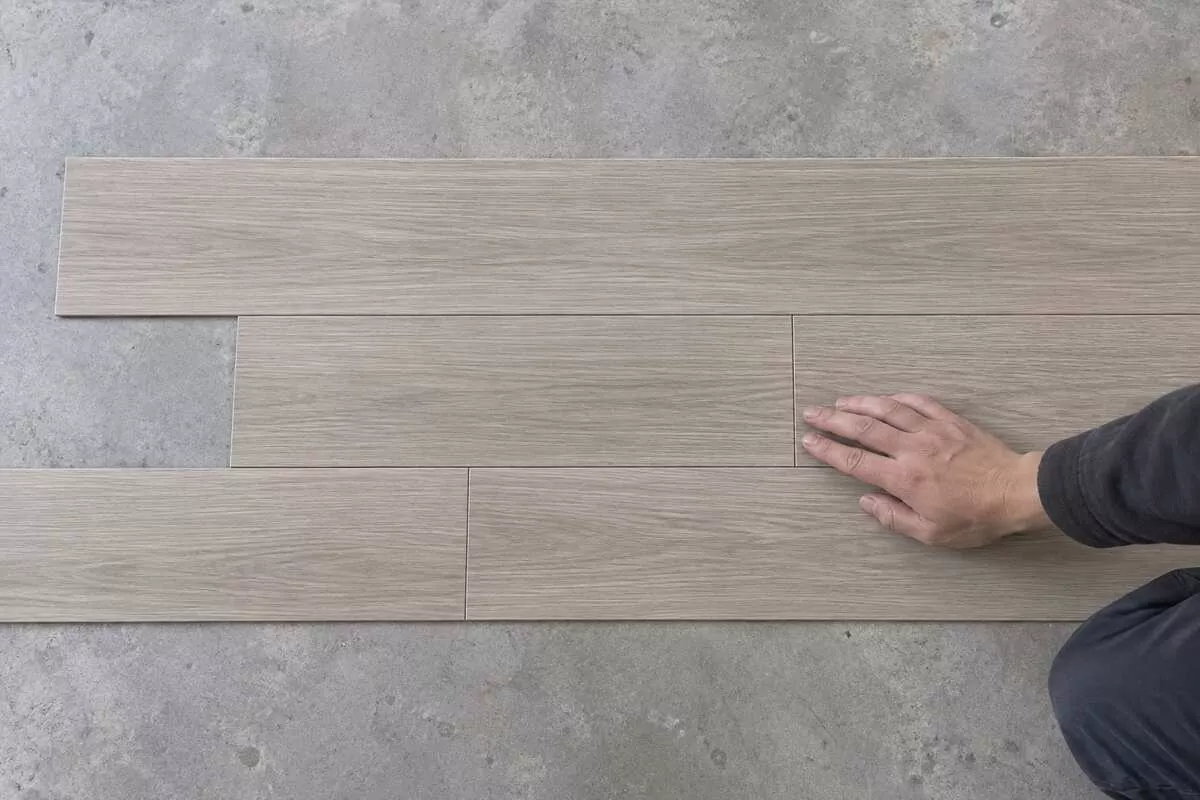
Two selected planks may fit correctly while a larger assembly reveals alignment problems. A small test panel with several staggered rows gives a better practical view of how the joints work together.
The trial should cover:
Long-side alignment across adjacent rows
Short-end fit at several staggered positions
Alignment where end joints meet neighboring rows
Repeated gaps or height differences
Possible straightness or squareness problems
Compatibility between samples from different cartons of the same specified product
Use a clean, flat and stable test base. Support the entire panel and follow the approved stagger pattern and installation sequence. An unsuitable base can create movement or height differences that do not originate in the flooring.
Keep a record of the cartons and pallet positions used for the trial. Do not treat a successful small panel as proof that every plank in the shipment is acceptable.
Sample Planks From Different Cartons
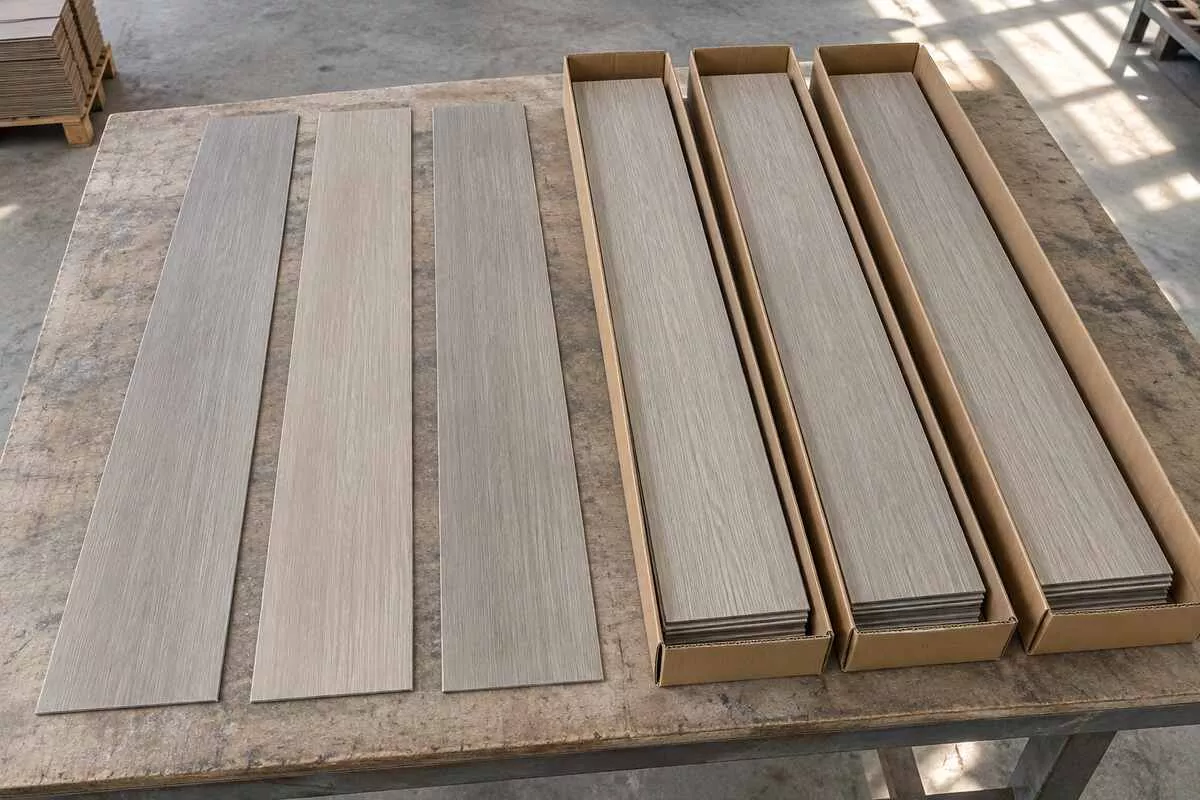
A trial made entirely from one carton provides limited information. Agree on a sampling plan that represents the order, including different cartons and pallet positions where accessible.
Consider:
Total shipment size
Number of product specifications and SKUs
Production batches or periods, where relevant
Carton locations within the selected pallets
Sample quantities and acceptance rules
How sampled goods will be identified and recorded
Connect planks from different cartons within the same specified product group. Do not assume that different thicknesses, locking profiles or product series are compatible simply because they share a similar décor.
Cross-carton sampling also provides an opportunity to compare dimensions, surface appearance, backing, bevels and packaging.
Compare Bulk Products With the Approved Sample
The approved sample should identify the complete product, not just the color. Its reference should connect to the quotation and purchase order.
Product and décor code
Declared flooring thickness and what it includes
Wear-layer specification
Plank length and width
Surface texture and gloss
Bevel treatment
Locking profile
Backing material and thickness, if included
Approval date or version
For a nominal 1220 × 180 × 5.0mm product, confirm what the stated 5.0mm includes and whether attached backing is additional. Nominal dimensions alone do not identify the locking system or guarantee joint compatibility.
Use the approved physical sample together with the written specification. Resolve discrepancies between them before shipment release. Our SPC flooring purchase order checklist explains how to record these requirements.
Common Joint Problems and What to Investigate
| Observed Issue | Possible Product Factors | Other Checks |
|---|---|---|
| Joint will not close | Profile dimensions, damage or machining debris | Assembly angle, sequence and compatible product selection |
| Visible opening | Profile variation or plank straightness | Incomplete engagement and test-base flatness |
| Raised edge | Thickness or profile inconsistency | Debris beneath the planks and incomplete assembly |
| Chipped locking edge | Machining, core or handling damage | Excessive force and incorrect tools |
| Misaligned corners | Squareness, dimensions or end-profile variation | Row alignment and installation sequence |
These are investigation points, not confirmed diagnoses. A repeated defect should be evaluated against the approved documents and inspection results.
What Should Buyers Do When a Locking Problem Is Found?
Separate questionable planks and record their carton or batch references. Repeat the check with additional samples while confirming that the test base, product compatibility and installation method are correct.
If the issue repeats, ask the supplier to investigate the affected quantity and propose corrective action. Sorting, reworking or replacement should be followed by verification against the agreed criteria.
Photograph the defect before modifying or discarding the sample.
Record where the sample came from.
Document the fitting method and observed behavior.
Determine whether the issue is isolated or repeated.
Agree on the disposition of affected goods.
Complete the required reinspection before release.
One damaged plank does not establish the condition of an entire order. Equally, replacing a few demonstration pieces does not resolve a repeated batch problem.
Record the Inspection Before Shipment
A practical inspection record should identify the order, product, batch, inspection date, sample quantity and sample source. Include close-up profile photographs, an overall view of the trial panel and notes on any gaps, damage or unusual fitting behavior.
Where formal tests are specified, attach the relevant results and identify the tested construction. A sample approval or trial-assembly video should not be presented as a locking-strength test report.
For the broader inspection process, read our SPC flooring quality control guide.
Click-Lock Quality Checklist for Buyers
| Order Stage | Required Confirmation |
|---|---|
| Quotation | Product construction, dimensions and locking system |
| Sample approval | Profile condition, assembly and identified sample reference |
| Purchase order | Written specification, inspection plan and acceptance criteria |
| Production | Machining consistency and in-process checks |
| Pre-shipment inspection | Representative carton sampling and multi-row assembly |
| Shipment release | Recorded results and verified corrective actions |
Buyers evaluating product options can also review our 5mm SPC flooring for wholesale and commercial projects. Thickness should be considered alongside locking accuracy, wear layer, backing and the intended application.
Frequently Asked Questions
How can buyers check an SPC flooring click-lock system?
Inspect the profiles, assemble compatible planks using the specified method and complete a multi-row trial on a flat base. Check for damage, abnormal resistance, openings, height differences and inconsistent fit across sampled cartons.
Is joining two SPC planks enough for inspection?
No. It is a useful initial check, but a multi-row staggered trial can reveal alignment issues that a single connection does not show. The sample quantity should follow the agreed inspection plan.
Should samples be selected from different cartons?
Yes. Representative sampling across cartons helps assess consistency. Assembly comparisons should remain within compatible product groups rather than mixing unrelated locking systems or thicknesses.
What causes gaps in click-lock SPC flooring?
Possible causes include profile variation, damage, debris, plank straightness or incomplete engagement. Installation technique and the condition of the test base or subfloor should also be investigated.
Does a thicker SPC plank always have a stronger lock?
No. Thickness alone does not establish locking strength. Profile design, machining accuracy, core properties and correct assembly also matter.
Can damaged locking profiles be accepted?
Damaged samples should be recorded and evaluated against agreed acceptance criteria. Repeated chipping, cracks or incomplete machining require further investigation and an agreed disposition before shipment release.
Does a trial installation replace locking-strength testing?
No. Trial assembly checks practical fit and visible joint condition. Mechanical testing uses specified equipment, procedures and acceptance criteria to evaluate strength.
When should click-lock quality be checked?
Check it during sample approval, production control and pre-shipment inspection. Keep the approved sample, installation instructions and written specification available for comparison.
Request an SPC Flooring Specification and Factory Quote
Tell us your required flooring thickness, wear layer, plank size, backing, surface, quantity and destination. Include any locking-system, testing or inspection requirements that apply to your order.
Floren Floor can help confirm suitable product options, sample arrangements and packing information before preparing a factory quotation.
