
 简体中文
 Français
 لالعربية


When an importer is building a premium SPC flooring range, “ABA structure” can sound like a straightforward upgrade. In practice, buyers need to look beyond the name. The layer arrangement, surface specification, backing, locking profile and test results all affect whether a product fits the intended market.
This guide explains the LVT–SPC–LVT type of ABA flooring and how to compare it with standard SPC before placing a wholesale or project order. It is written for distributors, flooring brands and contractors buying for the Middle East, Europe and North America.
What Is ABA SPC Flooring?
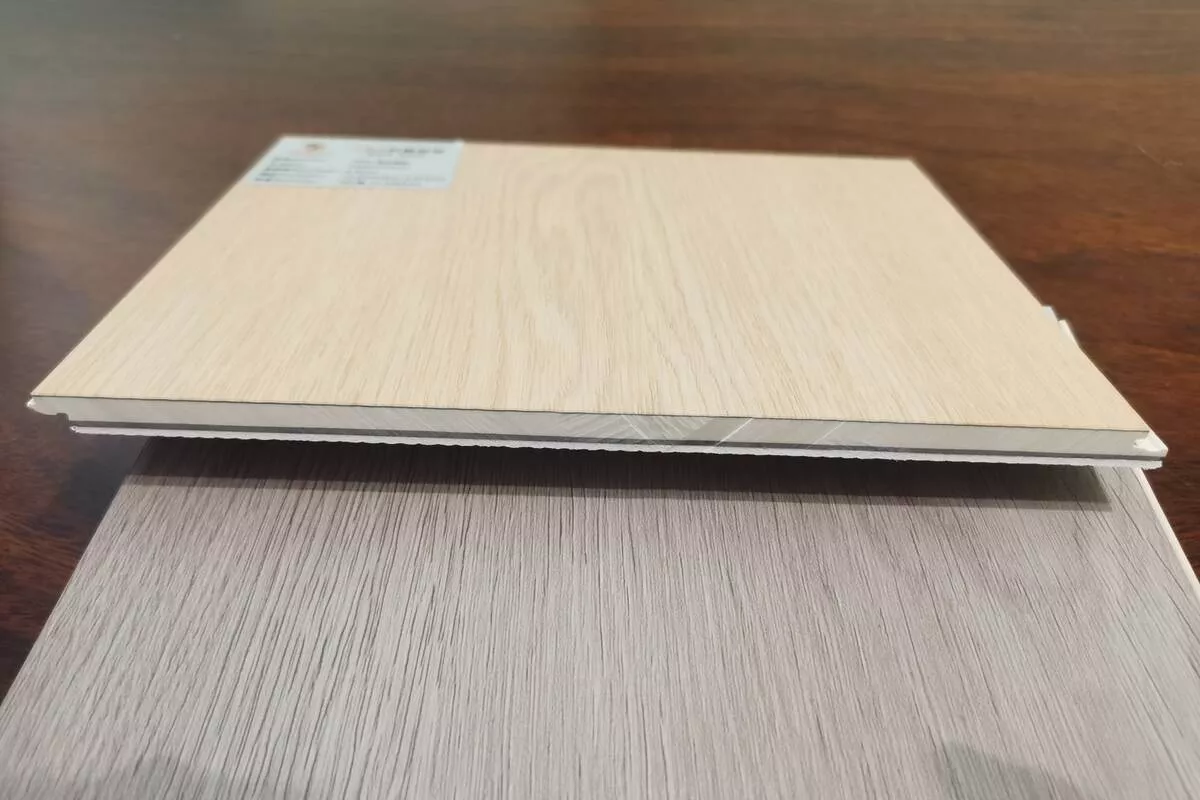
In the structure discussed here, ABA refers to an LVT layer above a rigid SPC core and another LVT layer below it. The finished flooring may also have a printed décor film, wear layer, surface coating and an optional attached backing. These components should be listed separately on the supplier’s technical sheet.
The term “ABA” is used differently across the flooring market. Do not assume that two products described as ABA have identical materials or manufacturing methods. Ask for a cross-section drawing and a physical sample, then check that both match the product offered in the quotation.
Why Consider ABA SPC for a Premium Flooring Range?
ABA SPC can give importers another construction to evaluate when they want to distinguish a premium collection from a standard rigid-core range. Depending on the formulation, buyers may be interested in surface feel, product positioning and the choice of decorative finishes.
Those possible benefits should be checked on the actual product. An ABA label alone does not establish better dimensional stability, lower emissions, stronger click joints or improved acoustics. For a meaningful comparison, request standard SPC and ABA samples with comparable plank sizes, wear layers and backing specifications.
ABA SPC vs Standard SPC: What Should Buyers Compare?
| Buying Point | ABA SPC | Standard SPC | What to Verify |
|---|---|---|---|
| Core construction | May use an LVT–SPC–LVT arrangement | Typically uses a rigid SPC core | Cross-section drawing and approved sample |
| Surface and feel | Depends on the complete construction | Depends on the complete construction | Side-by-side physical samples |
| Dimensional performance | Must be demonstrated for the selected SKU | Must be demonstrated for the selected SKU | Relevant test results and acceptance criteria |
| Click-lock performance | Depends on profile and production control | Depends on profile and production control | Locking profile and trial installation |
| Attached backing | Optional, depending on specification | Optional, depending on specification | Material, thickness, density and total thickness |
| Order cost | Quote the selected construction | Quote the selected construction | Like-for-like specifications and packing terms |
A fair comparison starts with the same intended application. A residential sample with a different wear layer or backing is not a useful substitute for a project-grade sample, even if the overall thickness looks similar.
Check the Layer Structure Before Approving a Sample
Ask the supplier to identify each component of the proposed ABA product in writing. The document should state the upper LVT layer, SPC core, lower LVT layer and any separate surface or backing components. It should also distinguish the SPC core thickness from the total finished plank thickness.
Inspect the physical sample from the top, underside and cut edge. Check that the décor and surface texture match the collection you plan to sell. Then connect several planks to assess joint fit and alignment. A close-up image is helpful for discussion, but the approved physical sample and technical sheet should control the final order.
Questions for Buyers in the Middle East
For projects in the UAE, Saudi Arabia, Qatar and other Middle Eastern markets, ask how the chosen flooring should be stored, acclimated and installed under the manufacturer’s instructions. Discuss the conditions at the actual site, including direct sunlight, indoor temperature changes and the planned subfloor.
Do not rely on an unqualified claim that a floor is “heatproof.” Request the test method, results and installation guidance for the exact product under consideration. For hotel and apartment projects, also confirm wear layer, backing, spare-stock requirements and consistency across the full order.
Questions for Buyers in Europe and North America
Buyers in Europe and North America may need specific product documentation for their distribution channel or project. Send the supplier your destination market and the exact requirements from your customer before requesting a quotation.
Where emissions, fire, slip or acoustic documents are required, check the test method, issuing body, tested construction and validity of each document. A report for another product, thickness or backing combination should not automatically be applied to the SKU you intend to purchase.
Documents to Request Before a Bulk Order
Technical data sheet: layer construction, plank size, core thickness, total thickness, wear layer, backing and locking system.
Approved physical sample: the actual décor, surface, edge and backing that will be used as the production reference.
Relevant test reports: reports for the chosen construction and destination market requirements.
Installation instructions: subfloor requirements, permitted underlayment, expansion details and care guidance.
Packing specification: planks and square meters per carton, carton dimensions, pallet plan and labels.
Inspection criteria: the checks and tolerances agreed before production.
Purchase order: the approved specification, quantity by décor, delivery terms and document references.
For the order details that should appear in writing, use our SPC flooring purchase order checklist. If the product includes a pad, review our guide to IXPE, EVA and separate underlayment before finalizing the finished thickness.
How to Compare ABA SPC Quotations
Ask each supplier to quote against one written specification. Include the plank dimensions, layer structure, wear layer, surface, backing, packaging and order quantity. State whether the price is based on a standard décor or a custom selection, and confirm the applicable trade term.
Before choosing a supplier, compare the approved samples and documents alongside the price. A lower unit price may describe a different structure or omit backing, packaging or testing requested for your market. Make those differences visible before the purchase order is signed.
Frequently Asked Questions
Is ABA SPC always better than standard SPC?
No single structure is best for every project. Compare the actual products against the intended application, required documents, budget and installation conditions.
Does ABA always mean LVT–SPC–LVT?
No. Suppliers may use “ABA” for different layer arrangements. Ask for a drawing and technical data sheet defining the exact product offered.
Does an ABA structure guarantee that the floor will not bend or develop gaps?
No. Performance depends on formulation, manufacturing control, locking design, storage and installation conditions. Review the relevant test results and installation instructions.
Can ABA SPC flooring have attached IXPE backing?
It can be offered with attached backing if the product is designed for it. Confirm the backing material, thickness, density and finished product thickness in the quotation.
Does ABA SPC automatically meet European or North American project requirements?
No. Ask which requirements apply to your destination and obtain documents for the specific product and construction being supplied.
What should I send when requesting an ABA SPC quote?
Send your destination country, application, preferred plank size, target thickness, wear layer, backing, décor selection, quantity, packing requirements and any customer-required tests. Include an approved sample reference if you have one.
Request an ABA SPC Flooring Quotation
Floren Floor can review your target market and product brief to help define the sample, specification, packing information and quotation needed for your purchasing decision.
